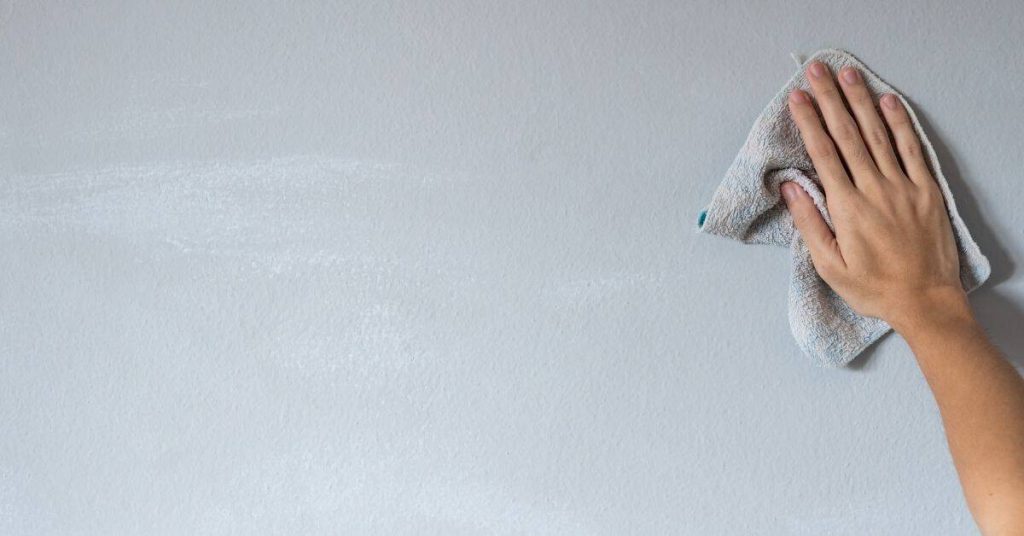
Hand wiping light gray plaster wall with cloth rag

Chalky Limewash: How to stop rub-off without sealing it too tight

Introduction

Chalky limewash rub-off is the chalky residue that can smear off if the wash isn’t properly set. The goal is a breathable finish that bonds to the wall without becoming a hard seal. We’ll cover prep, undercoats, and a careful application to keep rub-off in check.

Start with clean, sound plaster and remove dust; dampening the wall helps the limewash grab rather than ride on top. Consider a breathable undercoat or a diluted wash as a first coat, and work in thin, even coats. Always follow the product’s instructions and local rules to avoid over-sealing or staining.

Key takeaways

  • Prep walls thoroughly: scrub, rinse, remove loose material, repair cracks before limewash.
  • Use a breathable primer or undercoat if recommended, to improve adhesion without sealing.
  • Apply in thin coats, allow proper drying between passes, to reduce rub-off risk.
  • Choose limewash with lime-rich mix and avoid tight sealers on exterior walls.
  • Test a small area first, check breathability, and adjust technique before full scope.
  • Safety: wear gloves, eye protection, and ensure ladder stability during brushing.
Table of Contents

Why Limewash Can Rub Off — Causes and Science

Limewash relies on lime putty or hydrated lime binders mixed with water and a light aggregate to form a film. The ratios and particle size influence porosity, film formation, and how the coating cures on the wall. All of these factors connect to chalkiness and the potential for transfer to hands or fabrics.

Bonding and film integrity hinge on binder content, surface texture, and particle distribution. Rough or uneven surfaces and weak films reduce adhesion, increasing rub-off risk as the coating wears or degrades. Natural carbonation and curing later phases also shape the finish’s durability and why premature drying can create a brittle, chalky surface.

Binder, carbonation and pigment factors

The heart of limewash is its binder – lime putty or hydrated lime. Too little binder makes a weak film that rubs off easily.

Carbonation turns calcium hydroxide (lime) into calcium carbonate. Incomplete carbonation leaves a chalky surface. Check for fizzing when you add vinegar to test.

Pigments can loosen and transfer if they’re not well bound or if the limewash is too thin. Stir your mix well before applying.

Substrate and moisture impacts

Plaster condition matters. Rough surfaces bind better than smooth ones. Prep is key: scrape off loose material, fill gaps.

Residual salts and moisture can weaken adhesion. Test for efflorescence – a white powdery residue. If present, treat with a salt inhibitor before limewashing.

Previous coatings can affect adhesion too. Ensure they’re sound and compatible with limewash.

Environmental and application variables

Temperature and humidity affect curing. Ideal is around 50°F (10°C) and 50% RH. Too hot or dry can cause rapid carbonation, leading to a chalky surface.

Drying speed matters too. Limewash should cure slowly for best results. Keep it damp with a fine mist if it’s drying too fast.

Over-thinning or incorrect brushing can leave a chalky finish. Follow your mix recipe and use a good quality brush, applying in even coats.

Back to top ↑

How to Prepare Walls so Limewash Bonds Properly

Start with a clean, stable substrate. The prep sequence centers on removing loose material, treating salts, and repairing defects to create a key-ready surface. This reduces the chance of future rub-off and ghosting on the finished wall.

Gentle brushing and a detergent-free rinse are typical cleaning steps to avoid leaving residues. Be wary of dust and residual powders that can prevent good bonding. Salt and moisture management—via testing and targeted treatments—helps keep limewash honest on the wall.

Step-by-Step Process

Follow this clear sequence to prepare your walls for limewash, ensuring a strong bond and minimizing rub-off.

  1. Inspect walls: Check for loose material, cracks, or damage. Mark areas needing repair.
  2. Protect the area: Lay drop cloths, secure edges with tape, and cover any openings to contain dust.
  3. Clean surfaces: Use a soft-bristle brush and a detergent-free rinse (like diluted white vinegar) to remove dirt and residues. Gently brush from top to bottom.
  4. Treat salts and moisture: Test for efflorescence using a simple water test or specialized kits. Apply poultices or salt inhibitors where needed, following manufacturer’s instructions.
  5. Repair and patch: Address marked areas using compatible lime-based fillers. Allow proper curing time to avoid ghosting or mismatched texture.
  6. Inspect again: Check for any missed spots or new issues. Make sure all surfaces are clean, dry, and free of salts before proceeding with limewash application.

Assessing and repairing plaster

Identify sound and failed plaster areas to decide whether patching or replastering is needed. Safety first: wear gloves, goggles, and a dust mask.

Tap the wall with a hammer. A dull thud indicates solid plaster; a hollow sound signals failure. Be cautious: if plaster crumbles easily, it may need professional attention.

For small cracks or holes: use a wire brush to remove loose material, apply lime-based filler, and smooth with a trowel. For larger areas: consider replastering using traditional methods or hiring a pro.

Cleaning, de-greasing and salt treatment

Thoroughly clean walls to remove dust, grease, and efflorescence (salt deposits) for optimal limewash adhesion.

Start with a soft-bristle brush and a mild detergent-free rinse. Work from top to bottom, using gentle circular motions to avoid creating streaks or residues. Never use harsh chemicals, as they can damage the substrate and hinder limewash bonding.

For efflorescence: perform a simple water test – if it turns white, salts are present. Use poultices or specialized salt inhibitors following manufacturer’s guidelines to treat affected areas. Allow sufficient drying time before proceeding with limewashing.

When to use a breathable primer or undercoat

A breathable primer can improve adhesion and prevent uneven absorption of limewash. Use it on porous, non-absorbent, or previously painted surfaces.

For porous substrates (like new plaster or bare masonry), a breathable primer helps even out suction and prevents ghosting. For non-absorbent surfaces (like previously painted walls) or when applying limewash over different materials, a primer ensures consistent adhesion.

Choose a primer with similar properties to your limewash – both should be breathable, natural, and compatible. Follow manufacturer’s instructions for application and drying times before applying the final limewash coat.

Back to top ↑

Application Techniques to Minimize Rub-Off

Mixing should aim for a balanced consistency that promotes adhesion while preserving breathability. Avoid overly thick slurries that sit on the surface or thin films that dry too quickly. Optional limeputty additions can be considered to adjust grab and texture.

Before application, ensure the substrate is clean and dampened appropriately, avoiding over-wetting. Patch repairs should be fully cured and compatible with lime-based coatings to prevent ghosting or texture mismatch.

Mixing ratios and consistency checks

The ideal limewash mix is like thin yogurt. Too thick, it won’t breathe; too thin, it’ll rub off.

Start with a 1:2 or 1:3 ratio of hydrated lime to water. Add more water if needed, but go slow. A little extra water won’t hurt, but too much ruins the mix.

Test your consistency by dipping a brush in and letting it drip. It should form a steady stream, not run like soup nor clump like frosting.

For better adhesion, add limeputty. Mix 1 part limeputty to 3 parts limewash. Stir well until smooth. This helps bind the limewash to the wall without sealing it tight.

Brush types, strokes and layering strategy

Use natural bristle brushes for limewash. Synthetics won’t work as well with this traditional finish.

Choose a 2-3 inch wide brush for most surfaces. For textured walls or roughcast, go wider – up to 4 inches.

Work in thin coats. Two light coats are better than one heavy one. Here’s why: Heavy coats take longer to dry and can crack or peel. Thin coats dry faster, allowing the limewash to carbonate properly without sealing the wall.

Use long, smooth strokes, working from top to bottom. This helps maintain a consistent texture across your surface. Don’t rework areas too much; it can cause the limewash to rub off later.

Drying times, recoat windows and environmental control

Limewash dries slowly. Plan for this. In ideal conditions (70-85°F/21-29°C, low humidity), it can take 24 hours or more per coat.

Wait at least 12 hours before recoating. This gives the limewash time to grab onto the wall without sealing prematurely. Too soon, and your second coat won’t stick right.

Watch out for humidity. If it’s too high (above 70%), wait until conditions improve. High humidity slows drying and can cause chalking.

Keep limewash away from direct sunlight while it dries. Sunlight speeds up drying, which can lead to cracking or peeling. Once dry, though, sun exposure helps carbonate the limewash, making it stronger over time.

Back to top ↑

Sealing Options That Stop Rub-Off but Keep Walls Breathable

Breathable sealers allow moisture to move through but can reduce chalking when chosen carefully. Film-forming sealers tend to trap moisture more, so they require cautious use on limewash. Understand how each type interacts with the limewash layer and underlying substrate.

Look for plaster or limewash compatibility and ensure the product maintains vapor permeability. Practical approaches include thinning coats or layering with compatible binders to reduce rub-off without sealing moisture in.

Breathable sealers and limewash-compatible stabilizers

To maintain your walls’ breathability, use natural or commercial breathable stabilizers. These allow moisture to escape while protecting the surface.

Diluted lime putty, for instance, is a traditional option that complements limewash perfectly. It’s made by mixing water with unslaked lime and letting it sit until it thickens into a putty-like consistency.

Silicate stabilizers are another breathable alternative. They react with the lime in your limewash to form a stable, protective layer without blocking moisture transport.

When to avoid tight, non-breathable sealants

Steer clear of impermeable coatings on lime substrates. They trap moisture, leading to damage and bubbling.

  • Film-forming acrylics: These create a solid barrier that prevents moisture escape. Avoid them on limewash.
  • Oil-based sealants: Similar to acrylics, oil-based sealants form tight films, trapping moisture and causing issues.
  • Wax or shellac: While they offer protection, these can also trap moisture, leading to problems over time.
  • Latex paints: High-gloss or semi-gloss latex paints create a non-breathable barrier. Stick to flat or matte finishes if using latex.

Instead, opt for breathable alternatives like lime-compatible sealers, silicate stabilizers, or diluted lime putty.

Layered sealing strategy and test patch protocol

Before committing to a full sealant application, follow this layered approach for light stabilization and testing:

Step 1: Light stabilization. Apply a diluted lime putty or compatible sealer in thin layers. Allow each layer to dry before applying the next.

Step 2: Test patches. Create small test patches on an inconspicuous area of your wall. This allows you to evaluate different sealers and application methods without affecting the entire surface.

Step 3: Evaluate rub-off and breathability. After drying, check each patch for rub-off resistance and ensure they’re still breathable using a moisture/vapor-permeance method. If satisfied with the results, proceed with your chosen sealer on the rest of the wall.
Back to top ↑

Light gray rough stucco texture with uneven surface

DIY and Natural Methods to Reduce Rub-Off

DIY strategies should address breathability first and surface sealing second. Prep, pH considerations, and efflorescence control all influence effectiveness. Avoid methods that create a hard, impermeable surface behind the limewash.

Traditional options like fresh limewash or lime putty-based washes can be gentle on breathability but may require more maintenance. Compare these with commercial products in terms of durability, texture, safety, and cost to determine fit for your wall.

Diluted limewash topcoats and natural binders

To reduce rub-off without sealing your walls too tight, try applying a diluted lime putty topcoat. This method addresses breathability while providing some surface protection.

Here’s how to make it: mix 1 part high-quality lime putty with 2-3 parts water until you get a consistency similar to thin paint. Apply this mixture evenly over your walls using a brush or roller.

Natural binders like casein (milk protein) can be added to enhance the wash’s durability. To make a casein-enhanced wash, mix 1 part casein with 4 parts water, then add it to your diluted lime putty mixture at a 1:1 ratio.

Note: While these natural binders help reduce rub-off, they may not provide the same level of durability as synthetic binders. They’re best suited for low-traffic areas or when breathability is paramount.

Case examples: successful DIY stabilizing

Here are a couple of real-world cases where homeowners successfully reduced rub-off using natural methods:

Example 1: A homeowner in a humid climate applied a diluted lime putty topcoat (1:2 ratio) over their existing limewash. After two weeks, they noticed significantly less rub-off without compromising breathability.

Example 2: Another homeowner added casein to their lime putty wash (1:4 ratio casein to water, then mixed with diluted lime putty at a 1:1 ratio) and saw improved durability. However, they noted that it didn’t perform as well in high-traffic areas.

Key takeaways: Diluted lime putty topcoats and casein-enhanced washes can help reduce rub-off while maintaining breathability. However, their effectiveness may vary depending on your specific environment and wall traffic.

Back to top ↑

Testing, Troubleshooting and Incremental Fixes

Describe the severity of rub-off with simple, observable cues to guide testing. Mild signs may show as faint transfer, while moderate cases show more noticeable chalking or powdering. Use these signals to decide on the next steps.

Pre-test checks cover surface moisture, temperature, porosity, and existing limewash condition. Small patches with controlled reapplication help you judge bond without a full recoat.

How to carry out a rub-off test and interpret results

Before you start fixing, test the severity of your limewash rub-off. Here’s how:

Rub-off Test: Lightly rub a damp cloth over a small, hidden area. If it turns white or leaves powder, you’ve got rub-off.

Cloth Test: Wet a cloth and wipe the surface. Check for chalky residue. Mild: barely any. Moderate: noticeable but not heavy.

Interpret results: Mild? Start with light fixes. Moderate? Try incremental fixes first, then reassess.

Fixes for localized chalking, bubbling or uneven finish

Don’t recoat the whole wall if you don’t have to. Here are spot fixes:

Light Sanding: Gently sand affected areas with fine-grit paper. Wipe off dust.

Re-sealing: Apply a thin layer of limewash to small, chalky spots. Let it soak in.

Spot Priming: If bubbling or unevenness is localized, apply a breathable primer before reapplying limewash.

When to consult a professional or replaster

DIY fixes not working? Here’s when to call in help:

Severe Rub-off: If more than 50% of the surface is affected, it’s time for a pro.

Bubbling or Cracking: These can indicate underlying issues. A specialist should assess.

Expect: Professionals will inspect, recommend fixes (could be replastering), and provide quotes. They’ll ensure your limewash lasts.

Back to top ↑

Tools, Materials Checklist and Safety Guidance

Equip yourself with brushes, trowels, mixing containers, and a breathable spray bottle to manage application. Keep a setup that minimizes drips and over-application on the substrate. Have a plan for dust control and cleanup as you work.

Safety gear should include eye protection, gloves, and appropriate respiratory protection when handling lime products. Ventilation and proper storage of materials are essential for a safe on-site workflow.

Tools and consumables to have on hand

Before you start, make sure you’ve gathered all the necessary tools and materials. This will save you time and ensure a smooth application process.

  • Natural bristle brushes (2-3 inches): For applying limewash. Synthetic ones can damage the finish.
  • Limewash-specific brushes: These have longer handles for better reach and control.
  • Trowels (1/4″ to 1/2″): For spreading lime-putty mixes and limecrete finishes.
  • Buckets (5-gallon): For mixing and carrying materials. Use one per color for easy identification.
  • Mixing stick: A long, sturdy stick for stirring limewash mixtures.
  • Breathable spray bottle: To dampen surfaces before application.
  • pH test strips: To check the alkalinity of your surface and materials. Lime-based products need a pH above 7.
  • Spatulas (various sizes): For applying small amounts of limewash or touching up areas.
  • Breathable primers: To prepare surfaces and improve adhesion.

Quick rule: Always have the right tool for the job. Using the wrong one can damage your finish or cause application issues.

Health, ventilation and PPE for lime products

Lime-based products can be harsh on skin and lungs. Always protect yourself before handling them.

  • Long sleeves and gloves: Protect your skin from lime burns. Gloves should be waterproof to prevent lime from seeping through.
  • Respirator with P100 filter: To protect against lime dust. A simple dust mask won’t cut it.
  • Safety glasses or goggles: To shield your eyes from splashes and dust.
  • Lime-resistant clothing: Wear old clothes that you can dispose of afterwards to avoid lime stains on your regular clothes.
  • Ventilation fan: Set up a fan to blow lime dust away from the work area. Cross-ventilation is best.
  • Avoid handling lime putty or powders dry: Always wet your hands first to prevent skin irritation and burns.
  • Wash hands thoroughly after use: Lime can continue to burn skin even after washing, so be thorough.

Quick rule: Never compromise on safety. Lime products are harsh, so protect yourself accordingly.

Visual checkpoints and quality-control tips

During and after application, keep an eye out for these signs to ensure a successful outcome with minimal rub-off.

  • Even color distribution: Check that the limewash is spreading evenly. Dark or light spots indicate missed areas.
  • No bubbles or blisters: These can cause uneven finish and increased risk of rub-off.
  • Good adhesion: Gently scratch the surface with a nail to check if the limewash is sticking. If it flakes off, re-apply in that area.
  • No visible brush or trowel marks: These can cause uneven finish and increased risk of rub-off.
  • Consistent texture: The finish should look uniform across the surface. Lumpy areas need to be smoothed out.
  • No cracks or gaps: These can trap moisture, leading to further damage and increased risk of rub-off.
  • Drying properly: Check that the limewash is drying evenly. Areas that dry too fast may need re-application.

Quick rule: Regular visual checks can help catch issues early, saving you time and effort in the long run.

Back to top ↑

Cost, Labor Considerations and Real-World Case Studies

Identify cost drivers such as limewash types, binders, sealers (if used), tools, and access equipment. Labor considerations hinge on prep time, number of coats, and curing windows dictated by weather. These elements shape overall project effort and budget.

Real-world cases illustrate how different approaches balance breathability, durability, and maintenance needs. Each case highlights scope, time spent, and observed outcomes to help you plan your own project with clearer expectations.

Time and cost trade-offs: DIY vs. pro work

DIY limewashing can save you money, but it’s not always the quickest or easiest route. Professionals bring experience and speed, especially for complex jobs.

Preparation is key to a successful finish. Pros know how to prep surfaces quickly and efficiently. They’ll repair cracks, control damp, and ensure your walls are ready for limewash. This can take a DIYer days, but pros can do it in hours.

Materials and repairs also factor into cost. If you need to replaster or make significant repairs before limewashing, consider hiring a pro. They can handle these tasks efficiently, saving you time and potential mistakes.

Budget for:

  • Pro prep work if your walls need extensive repair or damp control.
  • Materials: limeputty, water-based additives, primers, sealers, tools, scaffolding.
  • Disposal or cleanup costs.

Two mini case studies: one DIY success, one fix after failure

Case Study 1: DIY Success

A homeowner in a historic district wanted to preserve the charm of their old brick facade. They prepped the walls, applied a breathable primer, and used a natural limewash with added water-based additives for better adhesion. After three coats and a week’s curing time, they had a beautiful, durable finish that resisted rub-off.

Case Study 2: Fix after Failure

A DIYer rushed the process, skipping damp control and applying too many coats of limewash in humid conditions. The result was heavy rub-off and an uneven finish. They had to strip off the old limewash, replaster where necessary, and start again with proper prep and application techniques.

Learn from these cases: proper preparation and patient application are key to a long-lasting, low-maintenance finish.

Back to top ↑

Conclusion

With the science behind limewash on your side, you can lock in color and texture without trapping moisture or creating a hard-to-repair mess. The key is careful prep, controlled application, and a breathable finish you can trust over time.

Test a small area to verify bonding, then prep the surface thoroughly, choose a breathable seal if you need extra resistance, apply thin coats with proper curing intervals, and recheck after a day or two. Inspect the wall under good light, note any rub-off, and adjust your method or materials before doing the full project. Keep safety steps in mind: wear gloves, work in dry conditions, and ventilate the space as you work.

Common mistakes to avoid include sealing too aggressively or too early, piling on thick coats that trap moisture, and skipping test patches or ignoring dampness or efflorescence signs. Always work in clean, dry conditions, dampen the surface as needed before applying, and follow the manufacturer or material guidelines for cure times and ventilation. If the area shows ongoing dampness, structural cracking, or persistent rub-off after your fixes, consider bringing in a professional for a quick assessment and a staged plan. Stay steady, follow the checks, and you’ll finish with a durable, breathable limewash that looks good and lasts.

Back to top ↑

FAQ

What is the proper way to apply lime wash to avoid rub-off?

Use a steady, even stroke and work in small sections. Apply thin, uniform coats and avoid overworking the surface once the lime wash starts to set.

How can I stop rub-off without sealing the wall airtight?

Focus on surface preparation and breathable finishes. If you need more protection, choose a sealing option that allows moisture to escape and follow the product label for compatibility with limewash.

What prep steps are critical before limewash to maximize bonding?

Remove all loose material, dust, and chalk. Moisten the wall just before application to help the limewash adhere, and fix any obvious defects or loose patches first.

Should I use an undercoat or limewash-specific primer?

Check the manufacturer instructions for your product. If an undercoat is advised, apply it as directed and ensure it is breathable and compatible with limewash.

How should I mix and stir lime paint for best adhesion?

Follow the product label for mixing steps and consistency. Stir thoroughly to a uniform mixture and avoid leaving it in clumps or dry pockets before application.

Back to top ↑