
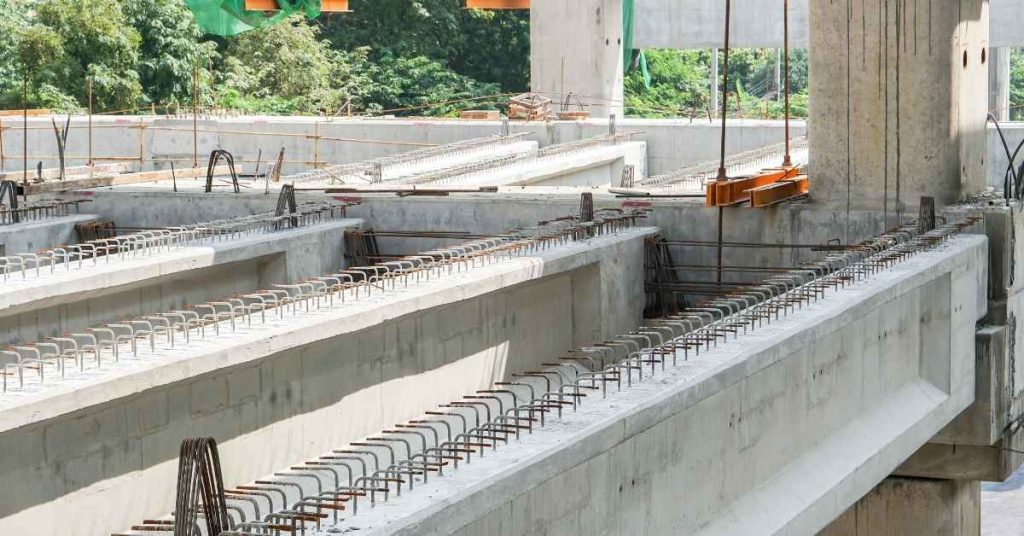
Concrete fibers cannot be assumed to replace rebar or wire mesh. Fibers can help manage certain cracking and may improve post-crack toughness in a properly specified system, but they do not automatically provide the continuous, located, and anchored reinforcement that a bar or welded wire reinforcement (WWR) layout may be designed to provide.
The right choice starts with the job the concrete must do. A decorative patio, a garage slab, a driveway, a footing, and a retaining wall can all contain concrete, but their crack-control, loading, edge-detailing, and anchorage needs can be very different.
If drawings, permit documents, an engineer, or a proprietary building system specify reinforcement, follow that information. A proposed change from bars or WWR to fibers is a design and documentation question, not a casual material swap made at the ready-mix truck.
Key Takeaways
- Fibers, WWR, and rebar may all be used in concrete, but they do not automatically perform the same function.
- Fibers are dispersed through the concrete; rebar and WWR can be deliberately located, supported, lapped, developed, and anchored.
- A slab may use fibers and conventional steel reinforcement. It is not necessarily an either/or choice.
- Crack management also depends on subbase conditions, joints, placement, finishing, weather planning, and curing.
- Do not remove, reduce, relocate, or substitute specified reinforcement without written approval from the responsible design professional or authority required by the project.
- For structural, permitted, foundation, retaining, suspended, or heavily loaded work, treat unclear reinforcement as a stop-and-escalate issue.
ToC
- Can Concrete Fibers Replace Rebar or Wire Mesh? Usually, No
- Start With Diagnosis: What Function Must the Reinforcement Perform?
- What Each System Actually Does—and What It Does Not Do
- Function-First Comparison: Which Question Points to Which Reinforcement?
- Before the Pour: Verify the Reinforcement Plan and Prepare the Work
- Placement and Finishing: Protect the Intended Reinforcement Function
- Common Failure Points: When Reinforcement Choices Go Wrong
- Questions to Ask Before You Approve Fibers, Mesh, or Rebar
Can Concrete Fibers Replace Rebar or Wire Mesh? Usually, No
All three products are commonly described as reinforcement, which causes understandable confusion. But a common name does not make them interchangeable. A bag of fibers added to a concrete load does not, by itself, create a continuous steel layout at a defined elevation, with the cover, bends, laps, and anchorage that a drawing may require.
Fibers are mixed throughout the concrete. Depending on the specific fiber material, geometry, dosage, test basis, and intended application, they may help reduce some early-age cracking or contribute to residual capacity and toughness after cracking. Those are useful functions. They are not proof that the fiber system replaces a particular bar layout or WWR detail.
WWR is a grid of wire that can provide distributed conventional reinforcement when the correct product is placed at its specified elevation and held there. Rebar is especially adaptable where reinforcement must follow a particular path: around an opening, along an edge, into a footing, through a connection, or in a beam or wall. Bars can be bent, tied, lapped, and developed according to an approved detail.
Do not rely on a bag label, a verbal suggestion, or the idea that the concrete will be “stronger” to justify omitting specified steel. Higher compressive strength does not automatically replace a designed tension load path or reinforcement detail. Equally, do not assume that all fibers are either structural or nonstructural; that depends on the exact product and the approved project system.
For a slab, footing, wall, beam, retaining structure, foundation-related work, driveway subject to unusual loads, or any regulated construction, use the drawings and obtain written approval before changing reinforcement. If a contractor proposes “fiber instead,” ask for the revised, project-specific documentation and the person responsible for approving it.
Start With Diagnosis: What Function Must the Reinforcement Perform?
Before comparing materials, identify the behavior the project needs from the reinforcement. “Prevent cracks” is not specific enough. Concrete commonly cracks because it shrinks, changes temperature, is restrained, or carries load. The practical goal is often to manage cracking and preserve intended performance, not to promise crack-free concrete.
Use these questions to frame the discussion:
- Is the concern plastic-shrinkage or other early-age cracking?
- Is the goal to limit crack width across a slab in service?
- Is post-crack toughness or resistance to break-up important?
- Does the concrete need a designed bending or tensile load path?
- Will it carry concentrated wheel loads, equipment loads, or point loads?
- Are there edges, openings, penetrations, steps, connections, or re-entrant corners requiring local detailing?
- Must reinforcement continue into another element or be anchored at a support?
- Does the project already have plans, permit requirements, or a manufacturer’s installation specification?
This separates serviceability from structural behavior. Serviceability includes concerns such as visible cracks, crack width, surface appearance, and long-term usability. Structural behavior concerns how loads transfer through the member, supports, connections, and reinforcement. A product that assists with crack control may still be unsuitable for a location that requires an engineered load path.
Collect the basic project facts before anyone selects reinforcement: intended use, concrete geometry, thickness shown on the plans, base and soil conditions, exposure to water or freeze-thaw conditions where applicable, joint layout, openings, edges, embedded items, and expected loads. A garage slab and a patio may look similar before the pour, but vehicles, soil support, drainage, and details at doors and perimeter edges can change the discussion.
One feature can also have several needs. A slab may need sensible jointing, a stable base, proper curing, and a specified reinforcement arrangement. Adding fibers does not eliminate those other controls.
Pause and get project-specific advice when soil support is uncertain; vehicle or equipment loads are involved; the concrete is suspended; the work retains earth; it forms part of a foundation or load-bearing wall; a large opening is present; field conditions conflict with the drawings; or a substitution is proposed for specified work. Do not diagnose structural adequacy from slab thickness, a crack photo, or a neighbor’s project.
What Each System Actually Does—and What It Does Not Do
Concrete is strong in compression but comparatively weak in tension. As it shrinks, cools, is restrained, or bends under load, cracking can occur. Reinforcement is selected to influence how the concrete behaves before and after cracking. The form of the reinforcement matters as much as the fact that reinforcement exists.
Concrete fibers
Fibers are short, discrete pieces dispersed through the mix. They may be synthetic, steel, glass, or another material suited to a stated concrete application. Their performance depends on more than fiber type: geometry, dosage, mixing sequence, uniform distribution, concrete mix, placement, finishing, and the test basis used for the project all matter.
In an appropriate, specified system, fibers may help with early-age crack behavior and may improve post-crack toughness. However, they do not inherently run continuously in a chosen direction, cross a joint in a prescribed manner, extend into an adjacent footing, or provide a hooked and developed bar detail at an opening. Those limitations are why a fiber addition is not a universal steel replacement.
Welded wire reinforcement
WWR is a grid, so it can provide distributed reinforcement in a slab when its product designation, layout, overlap where required, and elevation match the approved plan. Placement is critical. A sheet lying on the subbase is not functioning at the elevation intended by a design merely because it is inside the slab.
WWR is not interchangeable with rebar by appearance alone. Wire size, spacing, sheet layout, support conditions, and the way it is detailed at edges or openings can be materially different from a bar arrangement.
Reinforcing bars
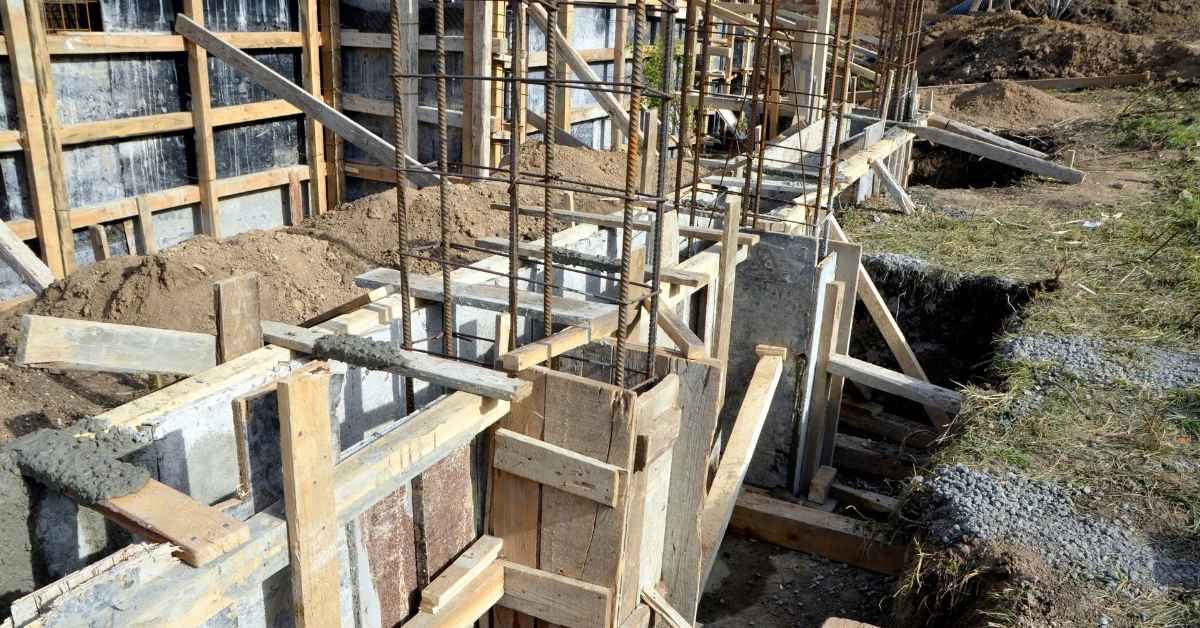
Rebar consists of individual bars that can be positioned to follow a known force path. It can be tied into a mat, bent at corners, carried through a wall or footing detail, lapped to another bar, and maintained with approved supports. This makes it useful where location, continuity, cover, and anchorage are central to the design.
Properly installed rebar is not simply “more metal.” It is reinforcement arranged to do a defined job. Cutting, bending, welding, moving, or omitting it in the field can change that job and should not be done unless the approved documents permit it.
None of these systems automatically correct a weak or poorly drained subgrade, inadequate concrete thickness, missing or poorly timed joints, excess added water, poor consolidation, or inadequate curing. For broader preparation, placement, and curing fundamentals, see our overview of concrete work. Good reinforcement choices support good concrete work; they do not excuse poor concrete work.
Function-First Comparison: Which Question Points to Which Reinforcement?
The table below is a screening tool, not a design table. It helps a homeowner ask the right question before buying material or accepting a substitution.
| Project question | Likely reinforcement function | What fibers may contribute | What WWR or rebar may contribute | Who approves the final choice? |
|---|---|---|---|---|
| How can early-age shrinkage cracking be reduced? | Crack management during early concrete life | May help as part of a specified fiber system. | May be present for other requirements but is not the only crack-management measure. | Installer and supplier within an approved specification; designer when specified. |
| How is distributed slab cracking managed in service? | Crack-width control and serviceability | May contribute depending on the product system and design. | May provide distributed conventional reinforcement if correctly selected and placed. | Designer or applicable specification for specified work. |
| Does the slab need improved toughness after cracking? | Post-crack behavior | May be selected and designed for this purpose. | May contribute according to its approved layout and design. | Responsible design professional or system specifier. |
| Is there a designed bending or tensile load path? | Structural load transfer | Not a substitute without explicit engineered approval. | Bars or WWR placed and detailed as designed are generally the relevant category. | Responsible design professional. |
| Are there edges, openings, or concentrated loads? | Localized reinforcement and detailing | Does not automatically supply the required local detail. | Bars or specifically detailed WWR can be located where the detail calls for it. | Responsible design professional. |
| Must reinforcement continue into another element? | Anchorage and continuity | Does not automatically provide continuous anchored reinforcement. | Bars can be developed, lapped, and tied into an approved connection detail. | Responsible design professional. |
If a proprietary fiber-reinforced slab system is proposed, request the complete project-specific specification. A fiber name or bag dosage is not enough. Confirm what it says about concrete thickness, base preparation, joints, conventional reinforcement, placement, finishing, curing, and any limits on use. If the reason for steel is unclear, treat it as a design question rather than a material-shopping decision.
Before the Pour: Verify the Reinforcement Plan and Prepare the Work
A reinforcement problem is far easier to correct before concrete arrives. Assemble the current drawings and specifications, reinforcement notes or schedule, any approved substitution document, relevant fiber product data, batch-ticket requirements, and the name of the person responsible for inspection or sign-off.
Then verify the physical setup against the approved plan:
- Identify the materials. Confirm that the delivered bars, WWR, and fiber product match the approved documents. Do not assume similar-looking wire, bars, or bags are equivalent.
- Check layout and local details. Look at bar and mesh locations, edges, corners, openings, penetrations, dowels, and connections. Verify that embedded items and joint plans do not conflict with reinforcement.
- Maintain position. Use chairs or other approved supports where required so steel remains at its intended elevation and clear of forms and ground. Follow the plan for required cover; do not invent a dimension from a generic online guide.
- Secure what must stay put. Tie intersections where the approved detail requires it, and plan worker and equipment access so reinforcement is not pushed out of position during placement.
- Confirm fiber handling. For fiber-containing concrete, confirm the exact product, intended dosage, addition procedure, batching sequence, and responsible verifier with the supplier and project documents. Do not field-adjust fibers by guesswork.
- Document before concealment. Photograph the prepared work from enough angles to show layout, supports, edges, and openings. Keep delivery tickets, batch records, inspection notes, and approved change records.
Do not depend on pulling mesh upward through fresh concrete as a reliable way to place it. It may not finish at the required elevation, and repeated handling can disturb the slab. Support and place it correctly before or during placement using the approved method.
Wet concrete can burn skin, and cut wire or rebar can cut or impale workers. Wear gloves, eye protection, boots, and skin-covering work clothes. Handle sheets and bundles with safe lifting practices, cap or otherwise control hazardous exposed ends as appropriate, and keep the work area clear enough to reduce trips.
Placement and Finishing: Protect the Intended Reinforcement Function
Once concrete placement begins, the key issue is preserving the intended reinforcement location. Bars and WWR need to remain at their designed elevation and maintain the required cover while concrete is placed, consolidated, screeded, and finished. A worker stepping on unsupported mesh or a buggy crossing a bar layout can undo careful preparation quickly.
For a fiber-containing mix, follow the producer’s and concrete supplier’s handling and finishing guidance. Watch for uniform distribution and finishability concerns. Do not respond to a difficult mix by adding water, adding more fibers, or dosing an unapproved site-mixed additive. Those changes can affect the delivered concrete and are not a reliable field remedy.
Some fiber types may be visible at or near a finished surface, depending on the product and finishing method. That is an appearance and system-selection issue to discuss before ordering, particularly for decorative work. Visible fibers are not a reason to remove reinforcement that the design requires.
Fibers also do not replace the rest of crack management. Joint layout, timely jointing, weather planning, proper placement, and curing still matter. Concrete handling and consolidation influence finished quality, but concrete density and compaction are not methods for selecting reinforcement.
Stop work and resolve the issue before proceeding if mesh has been pushed to the bottom, bars have shifted, intended cover is lost, reinforcement is exposed, the fiber product differs from the approved product, or delivery information conflicts with the plan. Once the concrete covers the work, verification and correction become much harder.
Common Failure Points: When Reinforcement Choices Go Wrong
The most serious mistakes often come from treating reinforcement as a generic add-on rather than a coordinated system.
- The mistaken-substitute failure: Fibers are used to justify removing specified bars or mesh, but there is no approved revision showing how load transfer, continuity, or local detailing is maintained. Preserve the specified system until a responsible professional approves a change in writing.
- The placement failure: Mesh rests on the base, supports are omitted, or steel shifts during the pour. Verify support and elevation before the pour and monitor them while placing concrete.
- The “reinforcement fixes everything” failure: Drainage, base stability, joints, finishing, or curing are neglected because reinforcement was added. Reinforcement cannot compensate for a moving base or poor construction control.
- The documentation failure: A proposal for “fiber instead” comes with no revised detail, test basis, product data, or written acceptance. Ask who is accepting responsibility for the substitution and retain the record.
- The appearance failure: Surface fiber visibility, texture changes, or finishing limitations are discovered after the truck arrives. Review the product system and finish expectations before ordering.
Do not use existing cracks as proof that reinforcement was missing or wrong. Cracks can result from many interacting causes, including restraint, curing, jointing, base movement, loading, and moisture conditions. For ordinary surface-care topics, see concrete maintenance basics. But a widening crack, displacement, settlement, significant spalling, water intrusion at a foundation, or a crack in a structural member calls for a professional assessment rather than a cosmetic patch alone.
Questions to Ask Before You Approve Fibers, Mesh, or Rebar
Use this short script when speaking with a contractor, ready-mix supplier, inspector, or designer:
- What exact function is this reinforcement intended to serve on this project?
- Is this a change from the drawings or specification, and who has approved it in writing?
- If fibers are proposed, what project-specific system documentation supports that use?
- What bars or WWR, joints, thickness, base preparation, and placement controls still apply?
- Where must the bars or WWR sit in the concrete, and how will that position be maintained during the pour?
- Are there edge, opening, connection, or concentrated-load details that fibers do not replace?
- Which delivery tickets, photos, inspections, and sign-offs will verify what was installed before it is covered?
The practical rule is simple: choose reinforcement by required behavior, not by appearance. Fibers can be valuable in the right concrete system, but a substitution for specified bars or wire mesh must be a documented design decision. For work connected to a foundation, review the relevant foundation type and its project-specific design needs rather than assuming a general slab approach applies.