
Introduction
A broom-finished concrete driveway is a surface texture created by brushing a broom over freshly poured concrete to leave short, even lines. This finish adds a non-slip surface and a utilitarian look that hides minor imperfections as it wears. Keep the work simple and consistent, moving at a steady pace and planning your crossings to avoid random marks.
Timing, direction, and the broom technique determine the final look and safety. Broom the surface when the concrete can hold the pattern without gouging, and keep a steady, even pass in the chosen direction. Watch for tear-out by avoiding aggressive passes at the same spot, and check product labels, manufacturer guidance, and local rules for any requirements.
Key takeaways
- Broom finish creates textured surface suitable for traction and aesthetics on driveways.
- Wait until surface skin forms; test by firm touch without indentation.
- Sweep in consistent direction with a uniform stroke pattern for even texture.
- Wear eye protection and gloves; maintain safe, controlled broom strokes.
- Avoid tearing the surface by finishing after set begins; protect from traffic.
- Consider how broom finish affects future coatings or repairs and plan accordingly.
Table of Contents
- Introduction
- Key takeaways
- What Is a Broom Finish and When Is It Appropriate?
- Surface Readiness and Timing — How to Know When to Broom
- Direction, Broom Selection, and Stroke Technique
- Preventing Tear-Out and Surface Damage During Finishing
- Common Mistakes and How to Avoid Them
- Implications for Future Coatings, Overlays, and Repairs
- Tools, Materials, and Visual Checkpoints Checklist
- Maintenance, Safety, and Long-Term Performance for Driveways
- Conclusion
- FAQ
What Is a Broom Finish and When Is It Appropriate?
A broom finish is a textured surface created by dragging a broom across a freshly placed concrete slab to leave visible marks and exposed aggregate. The texture results from the broom’s bristles sweeping the surface and catching varying depths of concrete as it stiffens. The timing of the finish, along with trowel work and set, determines how pronounced the texture will be.
In practice, the broom texture depends on broom type and stiffness, drag direction, pressure, and how close to finishing the surface the broom is used. Weather, humidity, and ambient temperature also influence the result. This finish suits driveways with moderate traffic and where slip resistance and curb appeal are priorities, but it may not be ideal for very high-traffic or steep sections due to wear concerns.
Visual characteristics to recognize
A broom finish leaves a distinctive texture on your concrete driveway. Look for:
- Parallel fine ridges, running the length of the driveway.
- A matte surface, unlike smooth or polished finishes.
To inspect uniformity, walk along the driveway. The ridges should be consistent in width and spacing. Check for any bare spots or areas where the finish is too heavy or light.
Pros and common driveway applications
Added traction: Broom finishes provide better grip, making them ideal for driveways with inclines or in areas prone to ice.
Low initial cost: It’s one of the most affordable finishing options. No additional materials needed after the broom itself.
Common applications include:
- Residential driveways, especially for homeowners with multiple vehicles or heavy traffic.
- Commercial properties with high foot traffic, like retail stores or offices.
Surface Readiness and Timing — How to Know When to Broom
The readiness window is defined by surface moisture, set stiffness, and any bleedwater left on the surface. Temperature and slab thickness shift this window, so expect differences as conditions change. Do not rush, as timing affects texture and durability.
Look for indicators like a duller sheen, a slight firming underfoot, and a faint drag pattern emerging. The surface should stop being tacky and feel dry to the touch before sweeping begins. A small test patch helps confirm texture depth and readiness against your planned finish.
Readiness signs (bleed water, sheen, thumbprint test)
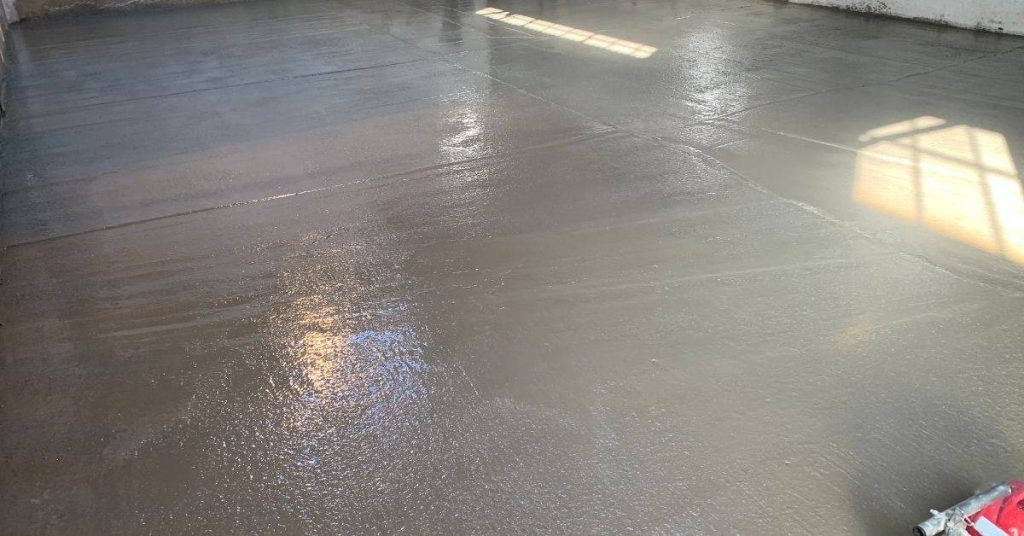
The surface is ready when bleed water has disappeared. Standing water means the concrete hasn’t started to set yet.
Loss of surface sheen indicates the start of setting. The slab will look matte instead of glossy.
Perform a simple thumbprint test: Press your thumb lightly onto the surface. If it leaves an imprint but doesn’t stick, you’re good to go. Too early and it’ll stick; too late and there’s no mark.
Weather and environmental impacts on timing
Temperature affects set time: warmer means faster, colder means slower. Ideal is 50–80°F. Too cold or hot? Wait.
Humidity slows down setting. Wind speeds it up by evaporating moisture. Adjust your timing accordingly.
Sunlight can accelerate setting, especially on thin slabs. Keep an eye out and broom before it’s too late.
Mix and placement factors that change timing
The mix design affects set time. Ask your supplier for their recommendations based on the mix you’re using.
Admixtures can speed up or slow down setting. Check if any are in your mix and adjust your schedule as needed.
Thicker slabs take longer to set. Plan accordingly, especially with large pours.
Placement rate matters too. Fast placement means faster bleeding and earlier brooming. Slow placement? Wait a bit longer.
Direction, Broom Selection, and Stroke Technique
Choose stroke direction that flows with the slope and anticipated traffic to minimize stopping and tearing out high spots. In some cases, alternate directions to avoid a uniform grain that could worsen along joints or wheel paths. Plan edges and transitions to maintain consistency.
Compare broom types by stiffness and density; the texture depth and traction will vary with each option. Consider how the texture holds up under freeze–thaw and wet conditions, and match the broom to the concrete mix and expected use. Practice passes before the pour to refine your technique.
Direction: slope and traffic considerations
The direction of your broom strokes is crucial for a smooth, durable finish. Here’s why:
Strokes should be perpendicular to the travel direction. This helps water drain off efficiently and prevents puddles that could damage the surface.
When dealing with slopes, adjust your stroke layout accordingly:
– If the slope is downstream, broom in that direction. This minimizes stopping and tearing out high spots.
– For upstream slopes, broom against the slope to prevent water from running back onto the fresh concrete.
Consider wheel paths and vehicle entry points when planning your strokes. Alternate directions occasionally to avoid consistent grain alignment.
Choosing the right broom and stiffness
The type of broom you use greatly affects your finish’s texture and durability.
Brooms come in two main materials: synthetic (plastic) and natural (bamboo or coconut). Synthetic brooms are stiffer, creating deeper grooves, while natural ones are softer, producing a lighter, more subtle texture.
Consider your desired groove depth and substrate condition when selecting a broom. For heavy vehicle traffic, a stiffer broom might be needed to create deeper grooves for better traction. However, too aggressive a broom can expose aggregate prematurely.
Bristle length and density also play a role. Longer bristles with higher density create deeper textures.
Stroke rhythm, pressure, and overlap for uniform finish
A consistent stroke technique is key to a uniform broom finish. Here’s how:
Use straight, consistent strokes. Keep your wrist firm and follow through with each pass.
Apply even pressure throughout the stroke. Too much pressure can gouge the surface; too little won’t create a texture.
Overlap passes by about half the broom width to ensure full coverage without leaving lines or gaps. Start at one end of your driveway and work your way across, then move down slightly for the next pass.
For the final pass, broom in the opposite direction to seal the texture. This helps lock in the grooves and prevents them from filling in with water or debris.
Preventing Tear-Out and Surface Damage During Finishing
Common tear-out causes include a surface that’s too soft, overworked areas, finishing at the wrong time, or using excessive broom pressure. Workability issues with the mix can also contribute to surface damage. Identify these signs early to adjust your plan.
Preemptive steps include verifying substrate moisture, controlling the slump and aggregate ratio, and placing joints correctly. Use compatible broom and plan the timing so you avoid reworking already-set patches. Protective measures during cure help prevent additional damage.
Primary causes of tear-out
Tear-out happens when the surface layer of concrete is weakened and gets pulled away. Here are the main culprits:
Brooming too wet or too dry. If you broom before the bleed water has disappeared, you’ll pull out the cement paste. Brooming too late, after the surface has started to set, can also cause tear-out.
Overworking the concrete. Too much handling, especially with power trowels, can bring up the fine particles and weaken the surface.
Using an improper broom type or applying too much pressure can also lead to tear-out. A stiff broom on a soft mix is a recipe for disaster.
Immediate corrective actions if tearing begins
If you notice tear-out happening, act fast to minimize damage:
Stop brooming immediately. Continuing will only make it worse. Re-evaluate your timing and conditions before proceeding.
If possible, re-float or re-level the affected areas with a magnesium float or a small rake to redistribute the concrete and smooth out the surface again.
Protect any damaged edges temporarily with cardboard or plywood to prevent further tear-out. If the tear-out is severe, you may need to wait for a firmer set before attempting any repairs.
Edge, joint, and formwork techniques to reduce failures
Proper preparation and technique at edges, joints, and forms can prevent localized tear-out:
Solid formwork. Ensure your forms are secure and rigid. Sagging or shifting forms can cause weak spots that tear out easily.
Properly struck edges. Use a straightedge to strike off the concrete at the top of the forms, creating a clean, level edge. This helps prevent tear-out where the edge meets the form.
Timely joint tooling. Cut control joints before the concrete sets too hard. This helps direct and control where the concrete will crack, preventing random tear-out along these lines of weakness.

Common Mistakes and How to Avoid Them
Frequent errors in broom finishing include timing the finish too early or too late, inconsistent broom pressure, and drifting directions without a clear plan. Substrate prep and curing are often overlooked, leading to dusting or cracking. Watch for changes in slump and surface sheen as indicators.
Prevention steps include sticking to a tested timing window, selecting an appropriate broom, standardizing passes, and keeping the surface clean and dry. Establish a clear direction sequence and cure plan to minimize delamination or tearing. Use quick checks on edges and joints to stay on track.
Overworking and premature broom strokes
Timing is everything when it comes to brooming concrete. Too early, and you’ll weaken the surface. Too late, and you might not get the texture you want.
Wait for the right moment: Look for bleed water to disappear, a sheen on the surface, and a thumbprint test that shows the concrete is stiff enough (press your thumb into it; if it leaves an imprint but doesn’t collapse, it’s ready).
Premature brooming can cause excessive laitance (a weak, dusty layer) and tear-outs. Be patient, let the concrete set up properly.
Inconsistent stroke direction and uneven texture
A consistent broom pattern is key for a uniform finish. Inconsistencies can lead to visual imperfections and reduced slip resistance.
Set a cutting/firing pattern: Start at one end of the slab, using long, even strokes in your desired direction (usually downhill or towards traffic). Maintain this direction throughout, overlapping each stroke by about half the broom width.
Changing directions mid-pour can create visible lines and weaken the surface. Stick to your planned pattern for a smooth, consistent finish.
Failing to adjust for conditions
Every pour is unique. What works in one situation might not in another. Don’t use a one-size-fits-all approach with your timing or broom selection.
Adjust dynamically: Keep an eye on the weather, substrate temperature, and mix design. Hotter temperatures may require earlier finishing, while colder ones need later. A wetter mix might need a stiffer broom to avoid pulling too much texture.
Monitor these conditions throughout the pour, adjusting your timing and broom selection as needed for a consistent, durable finish.
Implications for Future Coatings, Overlays, and Repairs
A broom finish alters the surface profile, influencing coating or overlay adhesion. The texture can affect how coatings bond and how the surface accepts primers. Consider how the broom pattern interacts with the intended finish layer.
Outline guidance for surface profiling and CSP targets for coatings, including prep steps like cleaning, moisture checks, and abrasion. Note that some finishes may require additional profiling or bonding agents to ensure long-term performance with coatings or overlays.
Why broom finishes can complicate adhesion
The textured top layer from a broom finish might seem tough, but it’s often weak and can flake off. This isn’t ideal for coatings or overlays that rely on mechanical bonding.
Manufacturers have specific surface-profile requirements (CSP). A broom finish might not meet these, leading to poor adhesion. You could end up with a coating that peels off over time.
Tack bonding, where the coating sticks to the surface through chemical reaction, can work but it’s less durable than mechanical bonding.
Surface-prep options to achieve a proper profile
If your broom finish isn’t up to par, don’t panic. You can prep the surface for better adhesion.
Common methods include grinding, shot blasting, or diamond grinding. These remove the weak top layer and expose a stronger, more receptive surface.
Always check with your contractor or manufacturer. They can tell you what profile they need (CSP 1-7) for their product to bond properly.
Cost and schedule impacts of rework later
Removing a broom finish isn’t cheap or quick. It adds labor, equipment rental, and downtime to your project.
You’ll need to grind or shot blast the surface, then clean it thoroughly. This can take days, depending on the size of the area.
Rework also means you’re paying for work twice – once for the initial broom finish and again to remove it.
It’s always better to get your finish choice and timing right the first time. It saves you money and keeps your project on schedule.
Tools, Materials, and Visual Checkpoints Checklist
Before brooming, gather the broom, handle length, and any edging tools you’ll need, plus PPE and a workspace layout to avoid cross-contamination. Inspect bristles for wear and have replacements ready. Establish the plan location and sequence to stay organized.
During brooming, monitor direction, pressure, and pass overlap to maintain uniform texture. After brooming, note when to mist or seal and how to protect the surface during cure. Keep tool cleaning and edge treatment as part of the daily routine on site.
Essential tools and materials to have on hand
Before you start, ensure your crew has everything they need. This checklist helps prevent delays and ensures a smooth finish.
- Brooms: Have enough brooms with stiff bristles and long handles (48″ to 60″) ready for consistent texture.
- Finishing floats: Screed and finish the concrete surface before brooming. Use magnesium or wood floats depending on desired finish.
- Edgers: Straight edges help create clean, sharp lines along forms. Check blades for sharpness and replace if dull.
- Measuring tape: Ensure accurate measurements for proper broom stroke length and overlap.
- Protective gear: Safety glasses, gloves, and steel-toed boots protect workers from debris and hazards.
- Concrete sealer or curing compound: Have these ready to apply after brooming for protection and moisture retention.
- Designated workspace: Set aside a clean area for tools and materials to prevent cross-contamination.
- Work gloves: Protect hands from concrete dust and debris during handling of tools and materials.
Quick rule: Having the right tools and materials on hand ensures a smooth, efficient brooming process with minimal delays or errors.
Visual checkpoints during the pour and finish sequence
Regularly inspect the concrete surface throughout the finishing process to ensure quality control and prevent issues.
- Bleed water: Monitor bleed water behavior. It should disappear quickly and evenly, indicating proper concrete mix design.
- Grooves uniformity: Check for consistent groove depth and spacing using a straight edge or ruler. Inconsistencies may indicate improper finishing techniques.
- Edge condition: Inspect edges regularly to ensure they’re clean, sharp, and free of tears or damage. Use edging tools as needed.
- Broom directionality: Ensure broom strokes are consistent and follow a specific pattern (e.g., parallel lines) for uniform texture.
- Pressure consistency: Maintain even pressure while brooming to avoid overly aggressive or light passes that can cause inconsistencies.
- Overlapping passes: Overlap broom strokes by about one-third of the broom width for complete coverage and uniform texture.
- Surface moisture: Check surface moisture levels before brooming. Too much or too little can lead to inconsistent results.
- Texture assessment: Regularly assess the texture by running your hand over the surface. It should feel consistent and even.
Quick rule: Regular visual checkpoints help catch potential issues early, allowing for timely corrections and a better final product.
Curing and protection items to plan for immediately after finishing
Proper curing is crucial for the longevity and strength of your broom-finished concrete. Plan ahead with this checklist.
- Curing compound: Have a suitable curing compound ready to apply soon after brooming, following manufacturer’s instructions.
- Plastic sheeting or covers: Prepare enough material to cover the entire surface for proper curing and protection from elements.
- Water source (for water curing): If using water curing, ensure a reliable water source is available for regular misting.
- Misting equipment: For water curing, have sprayers or misters ready to apply water evenly across the surface.
- Temperature and humidity monitor: Keep track of ambient conditions to ensure they’re within acceptable ranges for proper curing.
- Edge treatment: Protect edges with tape, foam, or other materials to prevent rapid drying and cracking during curing.
- Dust control measures: Plan for dust control during the initial curing period to maintain a clean, undisturbed surface.
- Cleaning supplies: Have tools and cleaning agents ready to remove any residue or debris from the surface after curing.
Quick rule: Proper planning for curing and protection ensures optimal concrete strength development and minimizes the risk of defects or damage.
Maintenance, Safety, and Long-Term Performance for Driveways
Outline a practical maintenance plan that fits the site, including cleaning routines and inspection intervals for sealer and surface wear. Use clear criteria to decide reseal, repair, or replace. Document any changes to plan during the project for future reference.
Prioritize safety by planning weather-appropriate maintenance windows and ensuring safe access for vehicles and pedestrians. Long-term performance should be measured by traction, abrasion resistance, and resistance to freeze-thaw cycles, with maintenance decisions tied to observed wear and aesthetics.
Routine maintenance to extend life and performance
Keep your broom-finished driveway looking good and performing well with these routine tasks:
Cleaning: Wash it annually using a mild detergent and soft-bristled brush. Avoid pressure washing, which can damage the texture.
De-icing: Use sand or kitty litter for traction in winter. Sodium chloride (table salt) can damage concrete over time; avoid it if possible.
Sealer inspection and reapplication: Inspect your sealer every 2-3 years. Reapply when it starts to wear off, usually after 3-5 years. Timing depends on traffic, weather, and initial application quality.
Safety during application and for driveway users
Ensure safety during finishing and for daily use:
PPE: Wear appropriate safety gear when applying the finish – gloves, safety glasses, and a dust mask.
Slip resistance: Maintain traction by keeping the surface clean. Reseal as needed to preserve slip-resistance properties.
Safe access: Ensure your driveway is clear of debris and ice for vehicles and pedestrians. Consider installing lights or reflectors for nighttime visibility.
When to refinish, reseal, or consider a different surface
Know when it’s time to take action:
Refinish or reseal: If you notice wear depth, hairline cracks, loss of traction, color fading, or broom-direction wear, it may be time to refinish or reseal.
Consider alternatives: If delamination becomes recurrent, excessive wear occurs, or prep for coatings becomes costly, consult a flooring professional. They can suggest alternative surfaces that might better suit your needs.
Regular inspection: Inspect your driveway annually to catch any issues early and prevent major repairs down the line.
Conclusion
A broom-finished driveway can look great and hold up if you finish it safely and at the right time, with the right stroke, and with tear-out prevention in mind. Stay aware of surface readiness, weather, and cure so the job lasts and looks even.
First, verify the slab has cured enough, test a small patch, pick a broom that matches the look you want, and practice a few strokes in a hidden corner. Then plan your direction, keep even pressure, and sweep consistently while watching for patchy spots, pulled fibers, or edge damage. Protect joints, pigmented areas, and any surrounding surfaces, and check frequently for signs of tear-out as you work. Finish within the recommended window, and have a plan for curing and any future coatings or repairs.
Common mistakes to avoid are finishing too soon or too late, overworking the surface, and using a broom or stroke pattern that creates uneven texture or pulls loose material. Always wear proper PPE, keep the work area orderly, test in a small area first, and stop if you see tear-out or deep gouges. If you notice unexpected moisture, cracking, or a substrate that won’t hold texture, pause and reassess—these are signs to call for a pro rather than forcing it.
If you’re unsure about substrate condition, significant cracks, or complex edging, consider bringing in a professional. For routine work, follow the checks, keep safety front and center, and you’ll end with a durable, attractive finish that stands up to traffic and weather. Stay focused, stay patient, and finish with confidence.
FAQ
What is a broom finish concrete and how does it differ from other finishes?
A broom finish is a textured surface created by dragging a stiff broom across the surface as it sets. It provides traction and a non-slip look, unlike slick, smooth trowel finishes or decorative overlays. The finish is common for driveways because it’s practical and relatively easy to maintain.
How do you apply a broom finish?
Wait until the concrete is ready to be worked but not fully set. Drag the broom steadily in one direction across the surface to create uniform ridges, then stop before the concrete fully hardens to avoid tearing the surface. Clean up any missed spots quickly and keep foot traffic off until the surface cures.
What is the timing for an optimal broom finish?
The broom should be applied when the surface has enough set to hold the texture but is not so hard that the broom will gouge it. Follow the concrete supplier’s or contractor’s timing guidance on surface readiness. If in doubt, test a small area or consult the product instructions or local rules.
Heavy vs. light broom finishes and disadvantages?
A heavy broom finish creates deeper ridges for more traction, but it can show more wear and may feel rougher. A light broom finish is smoother and easier on footwear, but may wear faster in high-traffic areas. Consider the driveway use, climate, and maintenance needs when choosing the depth.