

Introduction
Bottom-edge stucco moisture wicking occurs when capillary rise pulls moisture from the foundation into the lower stucco courses. This guide helps you spot the signs and understand why the drainage plane matters. Look for damp patches, staining, softening, or peeling where the stucco meets the foundation, and check for poor drainage or blocked weep gaps.
Understanding how building practices have changed helps pinpoint risk areas and maintenance needs. Recovery steps focus on fixing the drainage plane, clearing pathways for water, and resealing vulnerable joints, while keeping costs and disruption in mind.
Key takeaways
- Identify bottom-edge moisture wicking origins by inspecting capillary paths and drainage gaps.
- Visual signs include efflorescence, staining, soft edges, and spalling at the base.
- Systematic inspection uses moisture meters, infrared checks, and careful probing without damage.
- Inspect drainage plane and flashing safely; wear PPE and avoid shock hazards.
- Address common defects and EIFS risks; verify material compatibility and wall assembly.
- Plan remediation from targeted fixes to full replacement with contractor QA steps.
Table of Contents
- Introduction
- Key takeaways
- How Bottom-Edge Stucco Wicks Moisture — Mechanisms and Common Pathways
- Visual and Measurable Signs of Bottom-Edge Moisture Problems
- Systematic Inspection Methods and Tools to Confirm Capillary Rise
- Drainage Plane and Flashing Fundamentals at the Bottom of Stucco Walls
- Common Installation Defects, Material Compatibility, and EIFS-Specific Risks
- Repair and Remediation Strategies: Targeted Fixes to Full Replacement
- DIY Vs. Contractor Approaches, Selecting Help, and Quality Assurance
- Maintenance, Prevention, and Long-Term Monitoring
- Conclusion
- FAQ
How Bottom-Edge Stucco Wicks Moisture — Mechanisms and Common Pathways
Capillary rise occurs when moisture moves through porous materials by capillary suction. The base coat and substrate can draw water upward from the exterior grade or drainage plane into the lowest stucco courses. The stucco-to-mortar interface and fines in the mix influence how readily moisture travels upward.
Wicking typically starts at areas where the wall detail meets the ground or transitions such as at grade level, near the foundation, and around openings or coping. Failures in the drainage plane, flashing, or weep-screed details create pathways for damp air and liquid water to move upward. Inspecting these junctions helps identify common ingress points and courses affected by moisture movement.
Capillary Rise and Material Absorption
The choice of materials for your stucco system significantly impacts its ability to resist moisture. Porous finishes can absorb and transport water upward or laterally, leading to capillary rise at the bottom edge.
- Stucco: Highly porous stucco mixes can absorb significant amounts of water. Look for low-absorption aggregates and check material labels for absorption rates. To minimize capillary rise, use a mix with lower absorption rates and apply a water-resistant coating.
- Mortar: Mortar joints should be fully filled and properly cured to prevent water absorption. Check joint quality and cure status during inspections.
- Sheathing: Porous sheathing materials can contribute to moisture movement. Opt for low-absorption sheathing or apply a water-resistive barrier (WRB).
- Backer board: Highly absorptive backer boards can wick moisture upward. Choose low-absorption boards and ensure proper installation with expansion joints.
- Water-resistant coatings: Applying a water-resistant coating on porous materials can significantly reduce capillary rise. Check product labels for water resistance ratings and apply according to manufacturer instructions.
Liquid Transport vs Vapor-Driven Moisture
The mechanisms by which moisture reaches the bottom edge of your stucco system can differ. Understanding these mechanisms helps target appropriate repair strategies.
Liquid water intrusion occurs when rain, splash, or ground moisture enters through cracks, gaps, or porous materials. It can cause staining and efflorescence at the wall base.
Vapor movement, on the other hand, involves water vapor that condenses at the bottom edge due to temperature differences. This can lead to mold, mildew, and peeling paint.
Persistent moisture or dampness near the bottom edge indicates a need for inspection. Check for signs of both liquid water intrusion and condensation to determine the dominant moisture transport mechanism and tailor repair strategies accordingly.
Typical Entry Points at the Base of the Wall
The base of your stucco wall is where moisture often enters, leading to capillary rise. Identifying common failure points helps focus inspections and repairs.
Missing or blocked weep screeds: Weep screeds facilitate drainage by allowing water to escape from the wall cavity. Check for missing, blocked, or improperly placed weep screeds near the wall base. Repair or install proper weep screeds as needed.
Failed flashing: Flashing creates a continuous barrier and drainage path at transitions. Inspect flashing around windows, doors, and other openings to ensure it’s intact, properly installed, and terminates correctly into the stucco system.
Poor termination at trim: Incorrect termination of flashing or improper installation of trim can allow water to enter behind the stucco. Check trim termination conditions near the wall base and make repairs as necessary.
Splash/grade issues: Persistent wetting due to splash from rainwater or high ground levels can lead to capillary rise. Ensure proper grading away from the wall, and consider installing splash blocks or other protective measures.
Visual and Measurable Signs of Bottom-Edge Moisture Problems
Exterior clues include staining, discoloration, efflorescence, and softening at the bottom edge. Cracking and changes in texture or sheen can indicate ongoing moisture wicking near grade level. Puddling or damp patches may signal water accumulation or slow drying near the wall base.
Interior indicators involve damp odors, staining at the base of walls, peeling finishes, and mold growth concentrated where stucco meets interior spaces. Moisture meters, humidity readings, and evidence of damp gypsum board or insulation support the diagnosis. Documenting these signs guides prioritization and repair planning.
Exterior visual checkpoints
Before you start any repairs, use this checklist to inspect the exterior stucco face for signs of moisture intrusion.
- Efflorescence: Look for white, powdery deposits on the surface near the base. This indicates excess moisture.
- Staining: Check for discoloration or dark spots, which could signal water absorption.
- Hairline/diagonal cracks: Inspect for fine cracks that may allow water entry.
- Bulging: Look for any swelling or bulging at the bottom edge, indicating absorbed moisture.
- Damaged finishes: Examine the stucco finish near the base for signs of deterioration.
- Pooling/sheen changes: Check for water pooling or sheen changes near grade level that suggest ongoing moisture wicking.
Quick rule: If any of these issues are present, investigate further to determine the cause and extent of moisture intrusion. Document findings with photographs and notes for future reference and repair planning.
Interior symptoms and secondary clues
Moisture wicking at the bottom edge of your stucco walls can manifest in various interior signs. Here’s what to look for:
Musty odors: A damp, earthy smell could indicate hidden moisture.
Staining and peeling paint/wallpaper: Check baseboards and walls near the bottom of the wall for signs of water damage or staining. Peeling paint or wallpaper can also signal excess moisture.
Warped trim: Inspect trim near the base for any signs of warping, which could indicate absorbed moisture.
Mold growth: Look for visible mold or mildew, especially at the base of walls. If any interior symptoms are present, perform further diagnostic tests to confirm the source and extent of moisture intrusion. Record findings with photographs and notes for future reference and repair planning.
Measurable indicators (moisture meters, IR)
To map wet areas and distinguish between surface staining and substrate moisture, use non-invasive tools like moisture meters and infrared scans.
Moisture meters: These devices measure the moisture content of materials. Scan the affected areas to identify any elevated moisture levels or hot spots.
Infrared scans: Infrared cameras can detect temperature differentials, helping you map out wet areas. Use them in conjunction with moisture meters for accurate results.
If elevated moisture readings are detected, perform further diagnostic tests such as a capillary-rise check and drainage plane continuity test to confirm the source of moisture intrusion. Document findings with photographs, notes, and data logs for future reference and repair planning.
Systematic Inspection Methods and Tools to Confirm Capillary Rise
The goal is to separate capillary rise from bulk leaks and map damage behind the stucco and drainage plane. Begin with non-destructive checks and move to invasive probes if needed. Visuals, infrared scans, and moisture mapping help reveal hidden moisture paths.
Follow with targeted probes such as moisture meters or puncture tests where appropriate, then perform controlled water testing to confirm leak paths. Key checks include the condition of stucco, flashing at the bottom, and the drainage plane behind the cladding. Document paths and deterioration to guide remediation.
Non-destructive Testing Procedure and Tool List
Before employing invasive methods, utilize these non-destructive tools to identify potential moisture issues without damaging the structure.
- Pin/Scan Moisture Meter: Measures moisture content in materials. Key spec: Pin probe depth (typically 1-2 inches). Tip: Calibrate before use and check readings regularly.
- Infrared (IR) Camera: Detects temperature differentials, indicating potential moisture issues. Key setting: Emissivity (0.95 for most building materials). Note: IR cameras may not detect moisture behind insulation or in small voids.
- Borescope: Allows visual inspection of hidden areas. Key spec: Camera diameter (typically 5-12mm). Tip: Use with a flexible probe for better maneuverability.
- Visual Inspection: Identifies visible signs of moisture damage. Check stucco, parge, flashing, drip edges, weep screeds/damming, and drainage plane continuity.
- Optional: Hygrometer: Measures relative humidity in the air. Consider renting or borrowing for occasional use instead of purchasing.
Controlled water tests and invasive verification
Use this checklist when non-destructive methods are inconclusive, to confirm entry points and minimize additional harm.
- Pre-wet/Pre-saturate: Wet the exterior surface before testing to simulate real-world conditions. How to: Use a hose or sprayer to thoroughly wet the area.
- Simulate Rainfall/Spray-down: Recreate rainfall conditions to observe moisture movement. How to: Use a hose with a nozzle, mimicking rain intensity and duration.
- Test Specific Areas: Target suspected entry points for focused testing. How to: Direct water flow onto specific areas using a hose or sprayer.
- Make Small Exploratory Openings: Gently probe hidden areas to confirm leak paths. How to: Use a small, sharp tool (like an awl or utility knife) and carefully document findings.
- Document Findings: Record moisture movement over time. What goes wrong if skipped: Inadequate data for remediation planning.
- Use Dye/Tracer: Confirm leak paths by tracking dye or tracer movement. How to: Apply non-toxic, water-soluble dye or use a tracer gas detection system.
- Check Interior Symptoms: Verify if interior moisture problems match exterior findings. What goes wrong if skipped: Incomplete understanding of damage extent.
- Replicate Test Conditions: Ensure consistent testing by replicating initial conditions (pre-wet, spray-down). How to: Repeat the process using the same methods and intensity as the first test.
Quick rule: Always document findings and observations during controlled water tests for accurate remediation planning.
Tools and Materials for On-Site Moisture Diagnostics
Gather essential tools and materials to conduct thorough moisture diagnostics before starting work.
- Moisture Meters (Pin/Scan): Measure moisture content in materials. Key spec: Pin probe depth, typically 1-2 inches. Tip: Consult manufacturer instructions for proper use and interpretation of results.
- Infrared (IR) Camera: Detect temperature differentials indicating moisture. Key setting: Emissivity, usually set to 0.95 for most building materials. Note: IR cameras may not detect moisture behind insulation or in small voids.
- Borescope: Allows visual inspection of hidden areas. Key spec: Camera diameter, typically 5-12mm. Tip: Use with a flexible probe for better maneuverability.
- Visual Inspection Tools: Include flashlights, magnifying glasses, and measuring tapes to assess visible signs of moisture damage.
- Cutting Tools: Small, sharp tools (like an awl or utility knife) for making exploratory openings. Safety: Always wear appropriate safety gear when using cutting tools.
- Temporary Flashings: Seal entry points temporarily to prevent further water intrusion during testing. Tip: Use flexible, waterproof materials like silicone caulk or peel-and-stick flashing tape.
- Safety Equipment: Include safety glasses, gloves, and protective clothing for handling cutting tools and exploring hidden areas.
- Documentation Supplies: Notebooks, pens, cameras (or smartphones), measuring tapes, and labels for recording findings and observations.
Drainage Plane and Flashing Fundamentals at the Bottom of Stucco Walls
A continuous drainage plane behind stucco helps shed water and interrupts capillary rise. It should integrate with base flashing, weep screeds, and grade terminations to minimize water entry. Installation should maintain adequate thickness and alignment with joints and penetrations.
Bottom flashing strategies require proper siting above grade and clean terminations into the drainage plane. Drip edges and kick-out flashing help direct water outward. Continuity and proper detailing at corners and transitions are essential to prevent wicking.
Weep Screed/Termination Bead Function and Placement
The weep screed or termination bead plays a crucial role in draining moisture from stucco walls. It is the primary drainage termination, allowing water to exit the wall system.
Proper placement of the weep screed is essential to prevent moisture accumulation and capillary wicking. It should be installed at the lowest point of the wall, extending beyond the stucco face to facilitate water egress through weep holes.
Quick check: Inspect for proper slope towards weep holes, ensuring no blockages or debris. If missing or improperly placed, reinstall or adjust the weep screed to the lowest point with adequate slope.
Through-Wall Flashing and Weep Paths
Through-wall flashing is critical for diverting liquid water to the exterior, preventing it from entering the wall cavity. It should be integrated with the weep screed to create a continuous path for water drainage.
The flashing must have continuous laps to ensure no gaps that could allow water intrusion. Additionally, weep holes in the flashing must remain unobstructed to facilitate proper drainage.
Pro check: Verify through-wall flashing laps are tight and continuous, with functioning weep paths leading to the exterior. If damaged or blocked, repair or replace as needed.
WRB/Housewrap Integration and Laps
The water-resistive barrier (WRB) or housewrap must be integrated with flashing at the base for effective drainage. This prevents water intrusion and manages moisture properly.
Lap WRB over the base flashing by a minimum of 4 inches, extending to the weep screed termination. Proper laps direct water downwards and outwards, preventing capillary rise.
Check: Inspect for gaps or tears in the WRB, ensuring proper overlap and integration with the base flashing. If missing, damaged, or improperly lapped, repair or replace to maintain a continuous drainage plane.
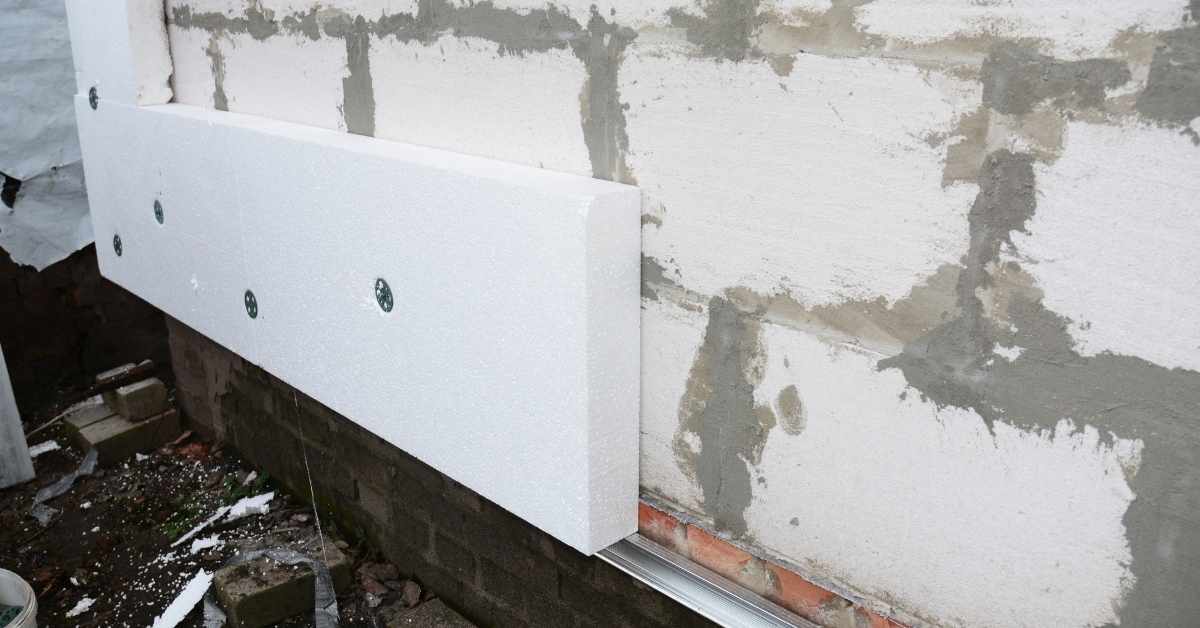
Common Installation Defects, Material Compatibility, and EIFS-Specific Risks
Frequent defects include gaps in the drainage plane and improper flashing that create moisture pathways at the base. Discontinuities where stucco meets other materials can compromise the barrier. These flaws often lead to capillary draw from the ground upward.
Material compatibility and sequencing are critical, especially with EIFS, stucco, flashings, and membranes. Incompatible primers, fasteners, or tapes can undermine moisture protection and promote wicking. EIFS-specific risks include drainage flaws and detailing at joints that require careful assessment.
Frequent Detailing Mistakes at the Base
To prevent capillary rise and moisture intrusion, avoid these common detailing mistakes at the bottom edge of your stucco walls.
- Missing or Reversed Flashing: Inadequate detailing can lead to capillary rise and moisture intrusion. Ensure flashing is present and correctly installed, allowing water to flow down and out.
- Improper Counterflashing: Incorrect counterflashing can trap water against the wall. Use proper counterflashing techniques to direct water away from the wall.
- Obstructed Weep Paths: Check for and clear any obstructions in weep paths to allow proper drainage.
- Poor Termination at Trim and Window Sills: Ensure termination is properly sealed and sloped to direct water away from the wall. Visually inspect these areas for gaps, cracks, or missing pieces.
Regularly inspect your stucco walls for these common mistakes. Repair or replace damaged detailing as needed, following manufacturer instructions to ensure proper installation.
EIFS vs Traditional Stucco: Drainage Considerations
Understanding the differences between EIFS and traditional stucco systems helps prevent moisture issues. Both systems require proper drainage, but they handle water intrusion differently.
Barrier EIFS Systems: These systems rely on a continuous barrier to keep water out. If water gets in, it has nowhere to go, increasing the risk of moisture damage. Regularly inspect for signs of moisture intrusion around the base of walls.
Drained EIFS and Traditional Stucco Systems: These systems have a drainage plane that allows water to escape. Ensure proper flashing and weep screeds are installed to facilitate drainage. Review building plans and inspect installed systems to determine if your system is barrier or drained, and if traditional stucco has proper drainage plane and flashing.
If you have a barrier EIFS system, consider upgrading to a drained system if feasible. Always follow manufacturer instructions for proper installation and maintenance of your specific system.
Material Compatibility and Galvanic Concerns
The compatibility of materials used in your stucco system can significantly impact its performance. Incompatible materials can accelerate corrosion, failure, and moisture intrusion.
- Incompatible Metals: Different metals have different electrochemical potentials. When in contact, they can cause galvanic action, leading to accelerated corrosion. Use compatible metals or separate them with appropriate barriers.
- Incompatible Sealants: Ensure sealants are compatible with the substrates they are applied to. Check labels for compatible substrates and primers before application.
- Improper Primers: Using the wrong primer can weaken bond strength and lead to delamination. Always use the recommended primer for your specific substrate and finish coat.
- Incompatible Fasteners or Tapes: Incompatible fasteners or tapes can compromise moisture barriers. Use compatible materials as specified by manufacturers.
- Improper Surface Preparation: Poor surface preparation can lead to weak bonds and delamination. Always prepare surfaces according to manufacturer instructions before application.
Regularly inspect your stucco walls for signs of galvanic action, such as rust or discoloration. Replace or separate incompatible materials, using appropriate barriers and primers as needed. Use compatible materials and follow manufacturer instructions for proper installation and maintenance.
Repair and Remediation Strategies: Targeted Fixes to Full Replacement
A repair hierarchy guides decisions from simple surface fixes to broader remediation. Start with localized sealing and patching, then move to drainage-plane repairs if needed. Escalate to more extensive work when moisture indicators persist or expand.
Diagnostic steps map capillary pathways and confirm drainage plane integrity. Establish criteria to determine local versus comprehensive remediation and ensure patch materials match existing textures and movements. Document repairs and plan for moisture checks post-work.
Localized repairs and flashing corrections
When moisture intrusion is localized and does not compromise the structural integrity of your home, targeted repairs can effectively resolve the issue. Begin by confirming that weep screeds are clear and functional, as blocked or damaged ones can trap water behind the stucco.
Inspect terminations for any gaps or cracks where water may enter. Flashing should be in good condition and properly integrated with the weep screed to ensure proper drainage. Reseal any compromised terminations using a compatible sealant.
If localized moisture intrusion is confirmed but there are no signs of structural compromise, proceed with these localized repairs. Replace or clear blocked weep screeds, install or repair flashings as needed, and reseal terminations to prevent further water ingress.
Substrate and Framing Remediation
When moisture damage is extensive, it may require partial removal of the stucco system to address underlying issues. If non-destructive testing or controlled water tests indicate wet stucco, damaged sheathing, or compromised framing, proceed with this repair level.
Remove affected stucco and inspect the substrate for decay or mold. Replace any damaged sheathing or framing members to ensure structural integrity. Restore your weather-resistant barrier (WRB) continuity by installing a new piece that overlaps the existing WRB by at least 6 inches.
This partial removal and remediation strategy addresses moisture damage without requiring full system replacement, serving as an effective middle-ground solution between localized repairs and full recladding.
When to consider full reclad or system conversion
In cases of pervasive moisture damage, structural concerns, or when code requirements mandate remediation, a full recladding or system conversion may be necessary. Before proceeding with such an extensive project, conduct a thorough diagnostic workflow to confirm the extent and nature of the issues.
Inspect the entire stucco system for signs of widespread damage, and perform confirmatory testing to verify your findings. If structural concerns are present or if code-triggered remediation is required, consider full removal and replacement of the stucco system.
In some cases, it may be beneficial to convert a barrier system to a drained assembly during this process. Consult with a qualified professional to determine the best course of action based on your specific situation and local building codes.
DIY Vs. Contractor Approaches, Selecting Help, and Quality Assurance
Assess safety, scope, and risk to decide what can be tackled by a capable homeowner. Fall hazards, mold exposure, and proper drainage details require careful consideration. The emphasis is on maintaining drainage plane continuity and flashing integrity.
When evaluating contractors, consider qualifications, references, and warranty terms. Require a clear plan for drainage and flashing, plus post-repair moisture testing. Establish QA steps to verify work, such as continuity checks and documentation.
Reasonable DIY Tasks and Safety Limits
Homeowners can safely perform several tasks to maintain their stucco walls’ moisture management system. These include:
- Surface cleaning: Remove dirt, mold, or mildew using a mild detergent and soft-bristle brush.
- Visual checks: Inspect the exterior for cracks, gaps, or other signs of damage.
- Basic caulking: Seal small gaps or cracks with a paintable, exterior-grade caulk.
Important: While these tasks are manageable, invasive work such as cutting into walls or modifying the drainage plane should be left to professionals. Always prioritize safety when working on your home’s exterior.
Choosing a Qualified Contractor and Verifying Scope
When hiring a professional, ensure they possess the necessary qualifications to perform the work safely and effectively. Here’s what to look for:
- Licenses and insurance: Verify that the contractor is licensed to perform the work in your area and carries adequate liability insurance.
- Stucco experience: Hire a contractor with proven expertise in stucco installation, repair, and moisture management.
- References and past projects: Ask for references from satisfied customers and inspect their past projects to ensure quality workmanship.
Important: Always obtain a written scope of work, including detailed project plans, photos, and warranties. This ensures both parties are clear on the project’s expectations and helps protect your investment.
On-Site QA and Testing to Confirm Repairs
To ensure that the repair work has been completed effectively, perform on-site quality assurance checks. These include:
- Visual inspection: Examine the drainage plane for continuity and flashing integration.
- Site cleanliness: Ensure that the work area is clean and free of debris.
Important: Require contractual acceptance tests such as professional moisture scans and water tests post-repair. These tests confirm that the drainage plane has been restored, preventing future moisture issues and ensuring long-term performance.
Maintenance, Prevention, and Long-Term Monitoring
Schedule routine exterior inspections focused on the bottom edge, flashing, caulking, and debris buildup. Record any signs of moisture, cracking, or staining to spot recurring issues early. Regular checks support timely repairs.
Ensure a continuous drainage plane, functioning weep holes, and intact flashing at the base. Manage grading, downspout discharge, and vegetation to minimize moisture near the wall. Maintain a log with photos and plan follow-up inspections and contractor reviews.
Routine visual and functional checks
Regularly inspect your stucco’s bottom edge for any signs of damage or wear. This includes checking flashing, caulking, and ensuring weep paths are clear.
Stake: Preventing water intrusion and stucco damage.
After storms or heavy rain, quickly check terminations for any signs of damage or leakage. Quarterly, perform a more thorough exterior inspection, clearing debris from weep paths, maintaining grade and splash conditions away from the wall.
Common mistake: Neglecting to repair damaged flashing or caulking immediately, allowing further water intrusion.
Moisture Monitoring and Documentation
Maintain a detailed record of moisture and staining data to identify trends and inform future maintenance. During routine inspections, note any cracks, gaps, or moisture staining.
Benefit: Early detection of moisture issues helps prevent escalation.
Use a simple moisture meter for periodic checks and take seasonal photographs for comparison. If moisture levels exceed your defined threshold or new cracking appears, consult a professional.
Common oversight: Not maintaining a clear log of moisture data with actionable thresholds.
Health, safety, and indoor air considerations
Hidden moisture can lead to mold growth and degraded indoor air quality. Regularly inspect for signs of mold or structural decay indoors.
Stake: Ensuring a safe living environment.
Monitor for musty odors, water stains, or visible mold growth. If any issues are suspected, engage professional remediation services immediately. Promptly address identified issues to prevent further damage and health risks.
Common mistake: Delaying action when signs of mold or structural decay are present.
Conclusion
Repairing bottom-edge moisture issues is about preventing capillary rise from causing ongoing damage, protecting the structural and cosmetic integrity of the wall, and avoiding unnecessary cost. By following careful inspection, targeted fixes, and ongoing monitoring, you reduce risk and extend the life of the stucco system.
Begin with a practical, small-area approach: visually document all signs of moisture and confirm with simple, field checks; then map a logical sequence for repair work, starting with drainage plane inspection and signaling where flashing or installation defects exist. Always test any fix on a limited area first, and keep notes and photos to guide subsequent steps and future maintenance.
Common mistakes to avoid include rushing the process, skipping safety steps, and applying fixes without confirming compatibility with existing materials. Do not rely on a single diagnostic method or a quick patch; use a combination of observations, measurements, and a conservative repair plan. Maintain a clear safety boundary, use appropriate personal protective equipment, and avoid irreversible changes until you’re confident in the diagnosis and method.
If signs point to complex EIFS conditions, uncertain drainage details, or substantial damange that requires scaffolding, long-term monitoring, or major replacement, it is prudent to call a qualified professional. A measured, cautious approach can protect the wall assembly and your investment, and a clear plan gives you confidence to move forward. Stay systematic, stay safe, and follow your documented findings as you progress.
FAQ
What are common signs that moisture is problematical at the bottom edge of stucco?
Look for staining, efflorescence, soft or crumbly stucco, or softer backing near the bottom edge. Evidence of dampness on interior walls or musty odors can also indicate intrusion. Visual checks plus probing at the base can help confirm suspect areas.
How do EIFS and traditional stucco differ in moisture risks at the bottom edge?
EIFS can be more prone to hidden moisture behind the cladding if flashing and drainage details are incomplete. Traditional stucco relies on a proper drainage plane and weep system to shed water. Both require correct detailing at the bottom edge to prevent capillary rise.
What repair or remediation steps are typically involved when bottom-edge moisture is found?
Remediation usually starts with stopping the source, followed by removing damaged material and restoring the drainage plane. Repairs should be aligned with the existing cladding system and include addressing flashing and sealants. Ongoing maintenance and monitoring help prevent recurrence.
What tools or methods help detect moisture and capillary rise at the base of stucco?
Moisture meters, infrared inspection, and careful invasive probing are common approaches. Use manufacturer instructions for any tool and follow local guidance on invasive testing. Document findings and compare with the expected drainage and flashing details.