

Introduction
Caulking between stucco and window frames should be sealed where moisture can enter and left unblocked where drainage is needed.
This article keeps it simple for DIYers: look for gaps, cracks, and misfitting edges and decide what to seal. Use the right sealant and apply cleanly, then check drainage paths.
Identify gaps around windows of varying sizes and choose the appropriate sealing approach for each. Apply sealant in clean, dry lines and keep weep holes or drainage channels clear to prevent pooling. Always verify manufacturer guidance, check local rules, and ensure the seal allows proper drainage.
Key takeaways
- Inspect gaps around windows and reveals; identify drainage paths before sealing.
- Choose sealant type by configuration; preserve weep holes and airflow for drainage.
- Leave controlled drainage paths clear; avoid full seals that trap moisture.
- Use appropriate tools and clean surfaces; adhesion improves with dry, dust-free prep.
- Safety: wear eye protection and gloves; avoid caulk misuse near electrical openings.
- Check flashing continuity and sealant compatibility; prevent water intrusion over time.
Table of Contents
- Introduction
- Key takeaways
- Article Scope and Quick Decision Guide
- Identifying Stucco-to-Window Junctions and Common Configurations
- Decision Criteria — When to Seal Versus Leave Drainage Paths
- Types of Caulk Lines and Sealant Systems for Stucco-to-Window Joints
- Tools, Materials Checklist, and Site Preparation
- Step-by-Step Caulk Application and Finishing Techniques
- Flashing, Drainage Continuity, and Integration with the Building Envelope
- Common Mistakes, Failure Modes, and Long-Term Structural and Energy Impacts
- Conclusion
- FAQ
Article Scope and Quick Decision Guide
This section outlines what you’ll learn about stucco-to-window joints, how to identify configurations, and how to decide where to seal or leave drainage open. You’ll see a practical decision flow to reference before starting work. Use the quick checklist to keep scope and plan clear for both homeowners and contractors.
Here we’ll define the joint scope, outline assessment steps, and present a repair workflow. You’ll learn how to spot movement cracks, drainage paths, and signs of water intrusion. The goal is a durable, moisture-managed seal that respects drainage at every step.
Who this is for
This guide is designed for homeowners, remodelers, and window installers with basic DIY skills. You’ll need a caulk gun, sealant, backer rod, primer, and some basic tools like a putty knife, utility knife, and tape measure.
Professionals will find this a useful reference, while homeowners should feel confident tackling most common repairs with the right information and care.
Note: If you’re unsure about any aspect of your project, it’s always best to consult with a professional before proceeding.
When to call a pro
While this guide covers most common repairs, there are situations that warrant professional evaluation:
Extensive Water Damage: If you notice significant water stains, peeling paint, or warped trim, it might indicate extensive damage behind the stucco that requires expert assessment.
Mold: The presence of mold indicates a moisture problem that may require professional remediation to ensure it doesn’t spread and cause health issues.
Structural Concerns: If you suspect structural damage, such as cracks in the foundation or walls, it’s crucial to consult with a structural engineer or architect before proceeding with any repairs.
Identifying Stucco-to-Window Junctions and Common Configurations
Start by locating every stucco-to-window juncture on the exterior and identifying window type. Note typical junction geometries at heads, jambs, sills, and corners that affect sealing. Visual cues guide where drainage might be hidden by trim or cladding.
Watch for flashing, drainage planes, and weep holes as you map each joint. Distinguish exposed flange or jamb from hidden edges. Understanding common geometries helps you plan moisture control and sealant needs without guessing.
Typical joint types (flush, recessed, trim-adjacent)
When inspecting your stucco-to-window junctions, you’ll encounter different joint layouts. Each type influences how you should seal or leave gaps for drainage.
Flush joints are where the window frame sits level with the stucco surface. Here, you typically need a continuous bead of moisture-tolerant caulk to prevent water intrusion.
Recessed joints, found in pocket or flush windows, have the frame set back into the wall. These often require backer rods and caulk to create a proper seal while allowing for expansion and contraction.
Trim-adjacent joints involve trim or cladding covering part of the junction. Be sure to check behind this trim for hidden gaps, as water can get trapped and cause damage if not properly sealed.
Visual checkpoints for inspection
Before you start sealing or making repairs, use this checklist to identify problem areas at your stucco-to-window junctions. Inspect both the exterior and interior of your home.
- Cracks: Look for hairline cracks or gaps in the sealant, stucco, or around windows. These can let water in.
- Staining: Check for discoloration on walls, trim, or ceilings. This could indicate past water intrusion.
- Failed sealant: Inspect existing caulk lines. If they’re missing, cracked, or peeling, it’s time to replace them.
- Buckling: Look for warped or bowed windows or walls. This could signal hidden water damage.
- Flashing: Check if flashing is present and properly installed at the head, jambs, and sill. It should be visible behind trim in some areas.
- Drainage planes: Ensure there are no obstructions blocking water from flowing down and away from windows.
- Weep holes: Verify that weep holes at the bottom of window frames are unobstructed to allow water to escape.
- Trim or cladding: Inspect for any gaps between trim, stone, or other cladding and the wall. Water can get trapped here if not properly sealed.
Quick rule: If you find any of these issues, address them before proceeding with sealing to prevent further damage.
Decision Criteria — When to Seal Versus Leave Drainage Paths
Use practical criteria to assess moisture risk and exposure at each joint. Look for signs that water could be trapped if sealed too aggressively. Let drainage remain where vents or gaps are necessary for moisture management.
Apply rules that balance waterproofing with ventilation, such as sealing where surfaces are impermeable and drainage where microcracks or porosity could trap water. A simple decision flow helps prevent over-sealing and misfitting joints.
Signs you should seal (air leaks, pest entry, energy loss)
Sealing is necessary when you notice visible gaps between your stucco and windows. These gaps can let in cold air during winter and hot air during summer, making your home less energy-efficient.
Drafty windows are a clear sign of air leaks. You might feel a draft or see curtains moving when there’s no breeze. Sealing these gaps will improve your home’s insulation and reduce energy bills.
Another reason to seal is to prevent pest entry. Gaps can serve as highways for insects, rodents, and other pests looking for a warm place to live. By sealing these openings, you’ll make your home less inviting to unwanted guests.
When to preserve drainage and flashing continuity
There are times when preserving drainage channels or weep gaps is crucial. This is especially true with layered stucco systems, where water needs a path to escape from the inner layers.
At window head and sill details, improper sealing can trap water. Weep gaps and flashing continuity allow water to drain out instead of getting trapped behind your stucco. If you seal these areas without proper drainage, moisture can build up and cause damage over time.
Remember, moisture is the enemy. It can lead to mold growth, rot, and structural damage. Always ensure there’s a way for water to escape, even if it means leaving some areas unsealed.
Types of Caulk Lines and Sealant Systems for Stucco-to-Window Joints
Identify the main sealant families and how they perform in outdoor, moving joints. Consider adhesion, elasticity, UV resistance, and long-term durability for exterior use. Compatibility with stucco and window materials matters here.
Compare paintability, cure behavior, and installation steps like backer rods and bead sizing. Understand how movement and water resistance drive material choices and maintenance needs for these joints.
Backer rods, bond breakers, and joint geometry
Controlling joint depth and adhesion is crucial for a durable seal. Here’s how:
Backer rods are foam or fiberglass inserts used to maintain a consistent joint width. They prevent overfilling and ensure even curing.
Bond-breaker tapes, like polyethylene film, create a barrier between the sealant and substrate, preventing adhesion at the back of the joint. This allows for better movement accommodation.
Joint shape affects sealant performance. Flush joints need less sealant but require precise tooling. Recessed joints hide imperfections but may trap moisture if not properly drained.
Material specs and standards explained
Choosing the right material ensures a long-lasting, functional seal.
- Movement capability: Look for elongation ratings (e.g., 200% or 500%) to accommodate joint shifts. Too low, it cracks; too high, it sags.
- Adhesion to substrate: Check peel strength and bond durability. Weak adhesion leads to sealant failure at edges.
- UV resistance: Ensure the sealant can withstand sun exposure without degrading or discoloring.
- Paintability: If you plan to paint, choose a paintable sealant with good adhesion and color retention.
- Cure time: Consider how long it takes for the sealant to set and reach full bond strength. Too fast, it’s hard to tool; too slow, it’s messy.
- Flashing integration: Ensure the sealant is compatible with your flashing material (e.g., metal, membrane) to maintain a watertight barrier.
- Building codes and manufacturer recommendations: Always check local building codes and follow manufacturer guidelines for best results.
Tools, Materials Checklist, and Site Preparation
List the essential tools and consumables you’ll need, plus staging tips to protect finishes. Include PPE recommendations and ventilation practices for solvent-based products. Plan for safe ladder use or fall protection if working above ground.
Cover surface prep materials, sealant types, backer rods, masking, and cleaners. Outline steps to keep joints dry and clean before the work begins, and how to plan for weather gaps or delays.
Cleaning and removal of old sealant
Before applying new caulk, it’s crucial to remove any old or failed sealant. This ensures a clean surface for the new sealant to bond with.
- Inspect joint: Check if old caulk is cracked, peeling, or missing.
- Cut out old caulk: Use a utility knife or blade to carefully cut out any remaining old caulk. Be sure not to damage the substrate.
- Remove backer rod (if present): If there’s a backer rod, remove it gently with pliers or needlenose pliers.
- Clean joint faces: Use a stiff-bristle brush and solvent-safe cleaner to remove dust, laitance, and any residue. Wipe clean with a microfiber cloth.
- Assess substrate soundness: Check for any cracks, voids, or damaged areas in the stucco or window frame. Repair as needed before caulking.
- Check joint depth: Ensure the joint is deep enough to accommodate new backer rod and caulk. If not, fill with a suitable patching compound.
- Dry out joint: Allow the cleaned joint to dry completely before applying new caulk. This may take several hours or overnight.
- Check temperature and humidity: Ensure the joint is above the minimum recommended temperature (usually 40°F/4°C) and within acceptable humidity range for proper caulk curing.
Quick rule: Always remove old sealant to prevent new sealant from failing prematurely due to poor adhesion.
Masking, protection, and surface conditioning
Proper masking and surface preparation are key to a clean, professional-looking caulk line.
- Protect stucco: Apply masking tape along the joint on both the stucco and window sides. This prevents caulk from adhering to unwanted areas.
- Protect glass: Use painter’s tape or plastic sheeting to cover the glass, ensuring no caulk gets onto it.
- Mask window flashings: Protect any exposed window flashings with tape or plastic to keep them clean and dry.
- Lay drop cloths: Place drop cloths on the ground or nearby surfaces to protect finishes from drips or spills.
- Check joint width: Ensure the joint is wide enough for backer rod and caulk. If not, use a putty knife to widen it slightly.
- Apply primer (if needed): If using an acrylic latex caulk, apply a compatible primer to both sides of the joint before caulking. This improves adhesion and paintability.
- Use adhesion promoter (if required): In some cases, an adhesion promoter may be needed for reliable bonding, especially on difficult surfaces like vinyl or aluminum.
- Allow primer to dry: If using a primer, allow it to dry completely before applying caulk. This usually takes 30 minutes to an hour.
Quick rule: Always mask and protect surrounding areas to prevent unwanted caulk application and ensure a clean, professional finish.
Step-by-Step Caulk Application and Finishing Techniques
Outline the exact workflow from backer rod placement to bead sizing and tooling. Keep the sequence focused on preserving drainage pathways around windows. Follow a logical order to avoid rework.
Include substrate prep checks, proper bead depth, and finishing techniques. Emphasize curing considerations and post-seal inspections to catch gaps or mis-seals early.
Step-by-Step Process
This section guides you through applying sealant to your stucco-to-window joints, ensuring a proper seal while preserving drainage where needed.
- Preparation: Ensure surfaces are clean, dry, and free of old sealant. Dry-fit backer rod depth to check compatibility with joint width.
- Masking: Protect adjacent areas using painter’s tape and paper to prevent unwanted sealant adhesion.
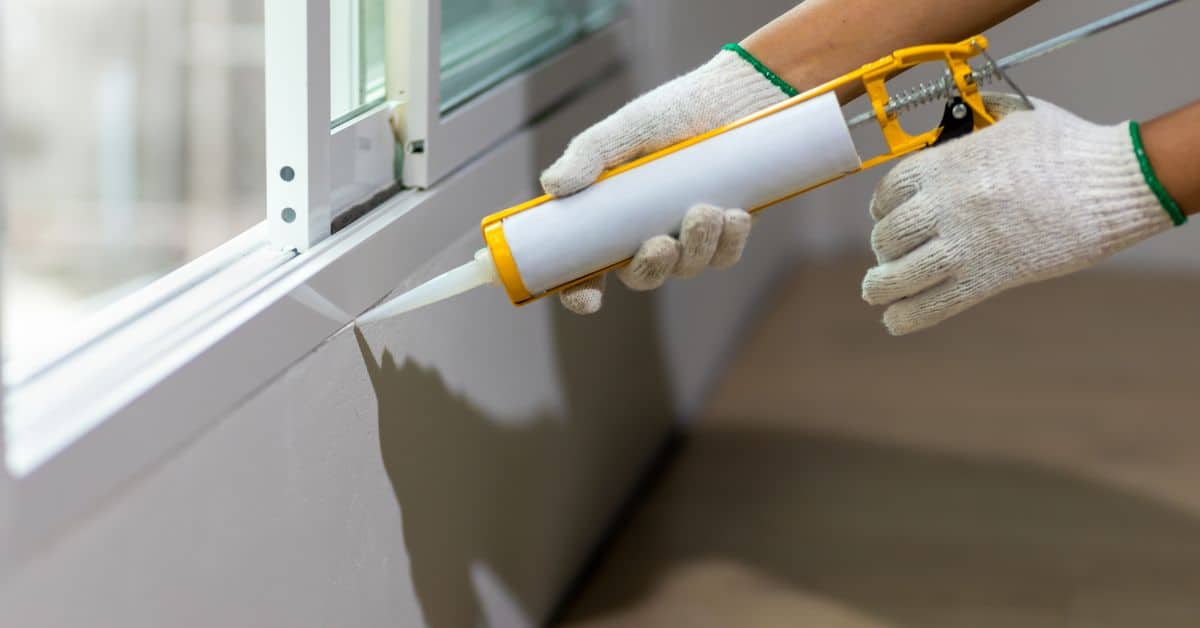
- Caulk Application: Apply sealant in a continuous bead along the joint, following the manufacturer’s guidelines for bead size and placement. Ensure slight compression to maintain a continuous seal without blocking weep paths.
- Tooling: Use a caulk tool or your finger to smooth and shape the bead, following recommended angles and motions. Feather edges to minimize water wicking.
- Finishing & Inspection: Remove masking materials immediately after tooling. Inspect for gaps, mis-seals, or signs of improper curing. Re-apply sealant if necessary.
Best practices for bead size and tooling
Proper bead sizing and tooling ensure a durable, attractive seal that maintains drainage pathways.
- Bead Width: Match bead width to joint depth. For example, use a 1/4″ bead in a 1/4″-deep joint. Avoid sagging or pinholes by not overfilling.
- Tooling Angles: Tool at a 45-degree angle to the surface for best adhesion and appearance. Use a caulk tool or your finger, depending on bead size and material.
- Avoid Over-Tooling: Be careful not to over-tool, which can remove sealant from the joint and leave it vulnerable to water intrusion.
- Feathering Edges: Feather edges to minimize water wicking. Use a damp sponge or cloth to blend edges into surrounding surfaces.
Curing, cleanup, and protecting the joint after work
Proper post-application care ensures your sealant cures correctly and maintains its integrity over time.
Keep the joint dry during cure time to prevent water from washing away uncured sealant. Follow manufacturer’s specified cure conditions, which may range from 24 hours to several days.
After cure time, remove masking materials carefully to avoid damaging the sealant. Clean tools with appropriate solvents or follow manufacturer’s cleaning instructions to maintain their functionality for future use.
Protecting the Joint: Apply a coat of paint or other protective finish as recommended by the manufacturer to extend the life of your sealant and keep it looking its best.
Flashing, Drainage Continuity, and Integration with the Building Envelope
Explain how caulk lines fit into the larger moisture-management system as a secondary defense. Emphasize the importance of proper flashing, weep holes, and drainage paths..caulk cannot replace flashing.
Discuss where to seal and where to leave drainage allowances, plus guidance on material choice and ongoing maintenance. Cover joint movement, UV exposure, and compatibility with the building envelope.
Checking and repairing flashing before sealing
Before you caulk, check your flashing. It’s the first line of defense against water intrusion.
Inspect: Sill pans, jamb flashings, head flashings – make sure they’re intact and properly installed.
Repair: If you find damage, fix it or cover temporarily with plastic sheeting to prevent water from getting trapped behind the stucco or window during caulking.
Remember, caulk is a secondary defense. Fixing flashing issues first ensures your caulk job lasts.
Ensuring continuous drainage paths and weeps
Water needs a way out. Here’s how to make sure it can exit the assembly:
Identify: Look for weep holes, drip edges, and overlaps – these are your water escape routes.
Preserve/Recreate: If you find clogged weep holes or missing drips, clean them out or recreate using flashing tape. Ensure overlaps meet building codes and manufacturer specs.
Your goal? Keep water moving down and out. Don’t seal it in with caulk!
Common Mistakes, Failure Modes, and Long-Term Structural and Energy Impacts
Highlight frequent errors such as overcaulking, sealing weeps, and wrong material choices. Explain how these mistakes enable moisture intrusion and mold risk. Note the impact on insulation and overall energy performance.
Provide practical prevention steps and remediation strategies. Include a plan for ongoing inspection, seasonal checks, and knowing when to call a pro for more serious issues.
Typical failure symptoms and diagnostic tips
Stucco-to-window caulk lines failing can show up in various ways. Keep an eye out for:
Exterior: Staining, blistering stucco, or crumbling around windows. These could indicate water intrusion.
Interior: Dampness, peeling paint, or musty odors suggest moisture problems behind the walls.
To diagnose if it’s the caulk line causing issues, look for:
– Staining: Check if it’s coming from above (roof) or below (ground).
– Soft substrate: Gently press around windows. Soft spots indicate rot.
Energy efficiency and indoor comfort implications
Properly sealed stucco-to-window caulk lines help maintain a comfortable, energy-efficient home. Here’s how:
– Air sealing: Correctly sealed caulk lines prevent cold/hot air from leaking in or conditioned air from escaping.
– Thermal bridging: Proper sealing minimizes heat transfer through the wall assembly, reducing energy loss.
– Moisture control: Keeping moisture out prevents mold growth and degradation of insulation, maintaining its R-value.
Conclusion
Protect the long-term reliability and look of the joint by sealing only where it keeps drainage clear and the building envelope intact, and by choosing the right system for each configuration so you don’t trap water or compromise flashing. Safe work habits and a focused plan keep you from costly mistakes.
Review the joints, confirm where you need drainage paths, verify flashing and continuity with the weather barrier, assemble your tools and materials, test a small area, and then apply in the correct order: prep, priming if needed, sealant selection per joint type, clean surfaces, install any flashing or backer as required, smooth and finish, then cure and inspect before weather exposure. This is your quick, practical checklist in one sweep.
Common mistakes to avoid are over-sealing or sealing where drainage should remain open, using the wrong material for a wet or dirty surface, skipping surface prep or cure time, and neglecting drainage continuity or flashing details that shed water away from the opening. Always work in dry, suitable temperatures, clean joints thoroughly, and never rush curing. If you detect active water intrusion or complex flashing details beyond your scope, stop and reassess.
If you hit a situation you can’t safely manage—unusual movement, severe flashing complexities, or uncertain moisture impacts—call a professional rather than risk permanent damage. Stay disciplined, test first, and when you finish, you’ll have a durable, clean result that protects the home for years to come.
FAQ
How do I identify gaps around windows and stucco that need sealing?
Inspect for cracks, splits, or visible gaps at the window flange and where stucco meets the frame. Look for daylight, water staining, or moisture on the interior wall near the window. Use a flashlight and run your finger along the joint to feel for open spaces.
How should I seal openings of different sizes around windows?
Small gaps get a flexible exterior caulk. Large gaps need a backing material first, then caulk on top. Use a foam backer rod in wide joints and a compatible sealant labeled for exterior stucco and window joints.
How do I prevent water damage while keeping drainage paths clear?
Never seal over weep holes or designed drainage paths. Seal the joint above the drainage area with a flexible sealant, but let the channels and weep holes stay open below. Check that flashing and drip edges aren’t blocked by sealant buildup.
What are the basic DIY steps for applying caulk around windows and stucco?
Clean and dry the joint. If needed, insert backer rod at wider gaps. Apply a steady bead of sealant along the joint, then tool it smooth with a proper caulk tool or finger. Let the sealant cure per the label instruction before expose to moisture.