

Introduction
A movement joint at a stucco-to-brick transition is a deliberate gap that lets the siding materials expand and contract without cracking. Its job is to separate the two substrates so stresses don’t transfer and crack the finish. This article shows practical, hands-on steps for placing joints and installing water breaks so the transition stays durable.
Always check manufacturer instructions and local rules to determine where joints belong and how wide to leave them. Use simple water breaks and proper flashing at the transition, and position any joints to interrupt crack paths. If unsure, verify with product labels and installation guides and plan for expansion joints as you frame and clad.
Key takeaways
- Proper placement of movement joints reduces cracking at stucco-to-brick transitions.
- Install water breaks with continuous flashing and proper weep holes to manage moisture.
- Plan inspections before starting to identify potential bridging and movement concerns.
- Use compatible materials and compatible expansion joints to prevent interface cracks.
- Understand expansion joints importance, spacing, and detailing per manufacturer guidelines.
- Safety warning: work safely with scaffolding and moisture barriers to avoid injury.
Table of Contents
- Introduction
- Key takeaways
- Why Stucco-to-Brick Transitions Are High-Risk
- Planning and Inspection Before You Start
- Movement Joint Types for Stucco-to-Brick Transitions
- Water Breaks, Flashing, and Drainage at the Interface
- Construction Detailing to Prevent Cracking
- Material Selection and Compatibility
- Common Mistakes and How to Avoid Them
- Costs, Safety, and Hiring the Right Contractor
- Conclusion
- FAQ
Why Stucco-to-Brick Transitions Are High-Risk
The stucco-to-brick interface concentrates moisture and movement stresses because the two substrates breathe at different rates and are exposed to different capillary actions. Flashing gaps and irregular transitions can create pathways for water and air to move where you don’t want it. When permeability mismatches exist, moisture can wick toward the brick or behind the stucco, accelerating deterioration if not detailed properly.
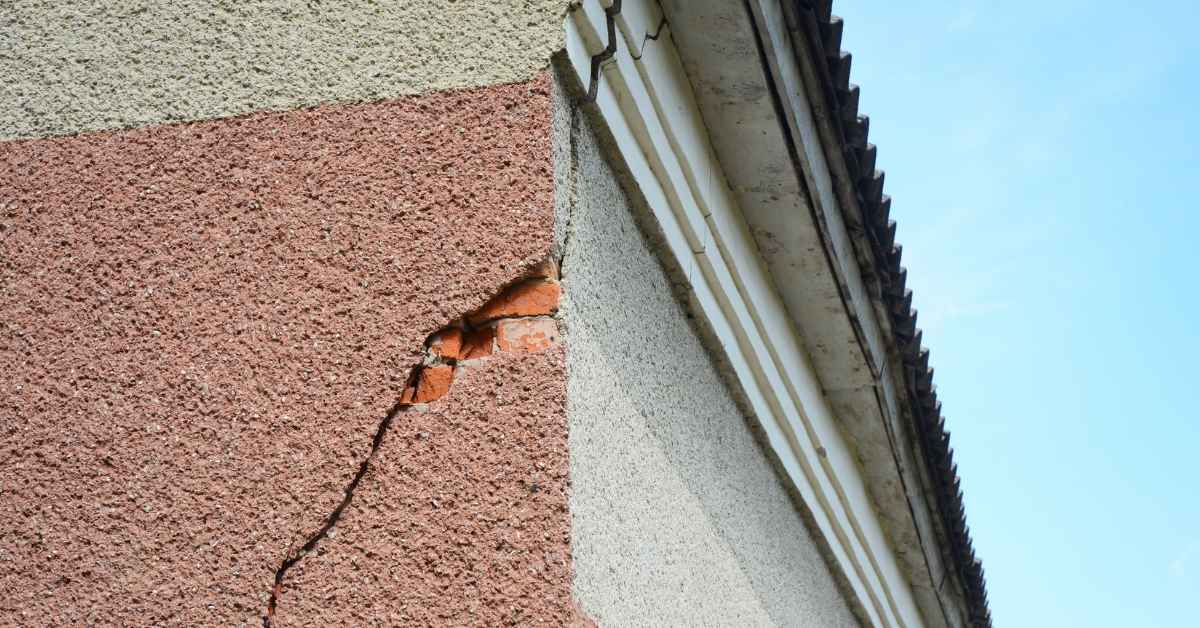
Temperature changes and natural material expansion and contraction add a layer of stress at the joint, increasing crack risk if joints are not planned. Common failure modes at these junctions include cracking, water intrusion, efflorescence, and spalling, with potential mold behind the stucco and damage to brick mortar. Detailing with flashing, air/vapor barriers, controlled joints, and weep paths is essential to accommodate movement and shed water. Climate history and substrate stability further amplify risk, so look for signs like ongoing dampness or prior moisture issues as red flags. Avoid quick fixes that bypass proper detailing and drainage planning.
How materials move differently
The choice of materials for your stucco and brick can greatly affect how they move over time, leading to stress at the joint.
- Thermal expansion: Stucco expands more than brick when heated. Look for low thermal movement coefficients in stucco mixes. Avoid dark colors that absorb more heat.
- Moisture absorption: Brick absorbs moisture, causing it to swell. Stucco doesn’t, but can trap moisture behind it. Use permeable backer boards and proper flashing to prevent this.
- Structural movement: Foundations shift over time. Ensure both materials are rated for the expected movement in your area.
- Curing shrinkage: Both materials shrink as they cure, but at different rates. Use compatible materials and control joints to manage this.
- Freeze-thaw cycles: Brick can handle these better than stucco. Protect the transition with proper detailing and sealants.
Common failure modes at interfaces
When transitions aren’t detailed correctly, several signs of failure can appear:
Cracking: This is the most common sign. It occurs when stress from movement isn’t accommodated properly.
Staining and efflorescence: Water intrusion behind the stucco leads to staining on the surface and white, powdery deposits (efflorescence) where water has evaporated. This indicates a breach in the moisture barrier.
Mortar loss and delamination: These occur when the bond between the brick and stucco weakens due to improper detailing or material incompatibility. They can lead to spalling, where chunks of stucco fall off.
Planning and Inspection Before You Start
Begin with a substrate condition and movement assessment to verify structural soundness where the transition sits. Look for existing cracks, delamination, or signs of prior movement that could influence joint design and sealant choices. Consider how age, material differences, and climate history affect the required joint spacing and backing materials.
Next, review drainage and moisture history by checking past intrusion, current slope, and any grading issues around the transition. Test moisture content and penetration risks that could compromise the stucco-to-brick interface, and document current coatings or render finishes to assess compatibility with new details. Include codes, permits, and an inspection plan as a checklist to align expectations with inspectors and trades before work begins.
Site assessment checklist
Before diving into design, use this checklist to inspect and document your site’s current condition.
- Walls: Check for cracks, delamination, or other signs of structural issues. Confirm substrate soundness with a simple knock test.
- Flashings: Inspect existing flashings at transitions. Ensure they’re intact and properly sloped to direct water away from walls.
- Ties: Check wall ties for rust or damage. Corroded ties can lead to wall collapse.
- Repairs: Document any prior repairs, their cause, and effectiveness.
- Moisture: Look for water stains, efflorescence, or other signs of moisture intrusion.
- Drainage: Check grading around the transition. Ensure it slopes away from walls to prevent water buildup.
- Culverts: Inspect downstream culverts. Clogged or damaged culverts can cause water backup.
- Coatings: Identify current coatings and finishes. Note any peeling, chipping, or other signs of deterioration.
Quick rule: A thorough site assessment helps prevent costly mistakes down the line.
When to call a pro and required documentation
Knowing when to involve professionals and what documents to request can save you time, money, and headaches.
- Structural issues: If you find significant cracks or other structural concerns, consult a structural engineer before proceeding.
- Mold or extensive moisture: If you suspect mold growth or widespread moisture intrusion, hire a professional inspector to assess the damage and recommend repairs.
- Contractors: When hiring contractors, request references, licenses, insurance certificates, and proof of workers’ compensation coverage.
- Specs: Ask for detailed project specifications outlining materials, methods, and expected outcomes.
- Warranties: Ensure you understand the warranties offered on labor and materials before starting any work.
- Test reports: Request moisture testing results to confirm substrate dryness before installing new systems.
Quick rule: Don’t hesitate to call in professionals when needed. Their expertise can prevent costly mistakes, and requesting the right documents ensures you’re protected.
Movement Joint Types for Stucco-to-Brick Transitions
The three main joint types at stucco-to-brick transitions are expansion joints, control/isolation joints, and movement joints. Each serves a different movement envelope: thermal expansion, shrinkage, wind sway, and seismic shifts. Understanding which joint type to use at which location helps prevent cracking and water issues over time.
Placement logic covers corners, transitions, and openings like doors and windows, plus roof lines. Typical spacing and proximity to edges and brick courses guide where joints should land. Materials and practices include backer rods, sealants, flashing considerations, and substrate-compatible versions to ensure durable water management and crack avoidance. Interaction with drainage and flashing is also key to maintain a continuous path for water away from the interface.
Control joints, expansion joints, and slip joints
Stucco-to-brick transitions need specific joint types to manage different kinds of movement. Here’s what each does:
Expansion Joints accommodate thermal expansion and shrinkage. Place them every 10-12 feet horizontally and at corners, door/window openings, and roof lines vertically.
Control/Isolation Joints prevent cracks from reaching the brickwork by stopping movement. Install them where stucco meets brick, typically 6-8 inches from corners and edges.
Slip Joints allow for wind sway and seismic shifts. Place them at transitions, above/below openings, and along roof lines.
Prefabricated vs field-formed joint systems
Two main types of joint systems exist: prefabricated and field-formed.
Prefabricated Joints offer consistency, easy installation, but may have higher upfront costs. They’re great for DIY homeowners due to their simplicity.
Field-Formed Joints are custom-made on-site, allowing for better fit and flexibility. However, they require skilled labor and can be more complex to install.
Choose based on your budget, skill level, and project specifics.
Water Breaks, Flashing, and Drainage at the Interface
Water breaks at the stucco-to-brick transition are critical for long-term wall integrity because they direct moisture out of the wall system. A continuous drainage plane and proper flashing prevent moisture from migrating behind either material. Without a deliberate water management sequence, water can accumulate at the edge of the transition and cause recurring damage.
Interface detailing should cover sealants, backer materials, and flashing terminations suitable for both stucco and brick substrates, plus termite and weep screed considerations. Layouts should show how flashings overlap and how drainage paths are tied to the weep holes. Step-by-step installation logic guides where to place flashings and how to route runoff away from the joint, with attention to common failure modes like cracked flashings or misaligned drainage paths.
Proper placement of flashing and drip edges
Flashings must be placed correctly to direct water away from the stucco-brick interface. Here’s how:
Brick face: Install flashing behind the brick ties, so it’s hidden once bricks are laid. This creates a barrier that stops water reaching the interface.
Stucco face: Add drip edges at the bottom of your stucco application. These should extend beyond the stucco surface to create an overhang, allowing water to drip off rather than seeping into the wall.
Through-wall flashing and weep strategies
Through-wall flashings and weeps work together to remove moisture that gets behind your cladding. Here’s how they should be used:
Through-wall flashing: Install this behind the stucco, running vertically from the top of the wall down to the bottom. It should extend into the brick cavity and terminate at a weep opening.
Weep openings: Drill small holes (around 1/4 inch) in the mortar joints of your brick course below where your stucco ends. This allows any moisture trapped behind the stucco to escape through these holes, preventing it from building up and causing damage.
Construction Detailing to Prevent Cracking
Establish core design principles that accommodate expansion and contraction while ensuring substrate compatibility. Place joints where stress concentrates to prevent cracks from forming in the first place. Keep joints flexible and integrate water breaks and flashing to maintain a watertight transition as the wall moves.
Develop a clear detailing workflow: substrate prep, crack mitigation, precise joint sizing, sealant and backing choices, and proper flashing. Consider lintel and tie-ins, fastener choices, and coating interactions that affect slip and stress transfer. Plan for favorable weather, curing, and climate timing to avoid premature movement or cracking, and include a robust inspection plan to catch issues early.
Substrate preparation and lath/mesh integration
The first step to a solid stucco-to-brick transition is preparing the substrate. Ensure it’s clean, dry, and free of any defects.
Lay out your metal lath or wire mesh over the brick surface. It should overlap the top edge of the bricks by at least 2 inches to provide proper support for the stucco.
Do not stretch the mesh tight; leave it slightly loose to allow for movement. Secure it with nails or staples every 4-6 inches along the edges and intersections.
The mesh should overlap any existing control joints in the brick by at least 1 inch on each side to maintain consistent load transfer and prevent weak spots.
Sealants, backer rods, and joint depth control
The right sealant is crucial for a flexible, watertight transition. Choose one that’s compatible with both stucco and brick, and can accommodate movement.
Before applying the sealant, insert a backer rod into the joint. This provides extra support and helps maintain the correct joint depth.
Do not overfill the joint with sealant. The ideal depth is about 1/4 to 1/3 of the joint width. Too much sealant can lead to bond failure when the joint moves.
The backer rod should be slightly oversized for the joint, so it compresses evenly when the sealant is applied. This ensures a tight, flexible seal that can accommodate movement without cracking.
Material Selection and Compatibility
Match mortar types, base coats, and finishes to ensure cohesive aging and adhesion. Consider how lime-putty or cement-based mortars interact with stucco and brick surfaces to age together without debonding. Document surface condition and prep steps to ensure proper bonding and moisture balance during transition work.
Evaluate metal components for galvanic compatibility and corrosion resistance, and plan for insulation and drainage at the joint. Climate and movement history influence whether to choose flexible or breathable materials that tolerate expansion, contraction, and freeze-thaw cycles. Use a practical selection checklist and an approved substitution guide to maintain long-term adhesion and performance.
Choosing mortars and stucco mixes
The first step in selecting compatible materials is understanding your substrate. Brick, concrete, or CMU? Each has different breathability.
Cement-based mortars are tough but less flexible. They’re good for solid substrates like concrete. Lime-putty mortars are more breathable and flexible, ideal for brick or CMU.
Match your base coat and finish to the mortar type. For example, use a cement-based base with a cement-based finish. This ensures cohesive aging and adhesion at the transition.
Sealant chemistries and adhesion primers
For masonry-to-stucco joints, consider silicone, urethane, or hybrid sealants. Silicones are flexible but less durable; urethanes are tougher but less flexible; hybrids balance both.
Primer use depends on surface preparation and substrate type. If your surfaces are clean, dry, and sound, you might not need a primer. But for porous or contaminated surfaces, an adhesion primer can help.
Adhesion primers promote bonding between the sealant and substrate. They’re especially useful when using urethanes or hybrids on masonry surfaces. Always follow manufacturer guidelines for application.
Common Mistakes and How to Avoid Them
Identify design flaws like missing or poorly placed movement joints, insufficient water breaks, and inadequate flashing details. These omissions set up the transition for leaks and cracks if not corrected during planning. Focus on proper joint selection to prevent future failures rather than patching after the fact.
Address installation mistakes at the transition such as inadequate substrate prep, absent flashing, and improper tie-ins between stucco and brick. Use a rigorous corrective approach: verify flatness, install a continuous drainage plane, and ensure flashing and weeps are correctly located. A field checklist for pre-install inspections and moisture testing helps DIYers avoid common symptoms of failure like efflorescence or damp spots, and when in doubt, consult a pro for a thorough assessment.
Mistakes in moisture barrier continuity
Continuity of the moisture barrier is crucial at stucco-to-brick transitions. Here are common mistakes to avoid:
- Mis-lapped WRBs: Inadequate overlap between wall wraps can lead to water intrusion. Ensure a minimum 6-inch lap when installing house wrap or other water-resistive barriers.
- Missing flashing: Omitting flashing at the transition allows water to penetrate behind the stucco. Install continuous flashing along the bottom of the brick and up the wall, lapping it over the WRB.
- Improperly terminated flashing: Flashing should extend beyond the stucco and be properly terminated with drip edges or other means to direct water away from the wall.
- Insufficient weeps: Inadequate weep holes in brick can trap moisture. Ensure there’s a weep hole every 30 inches along the bottom of the brick, and use through-wall flashing to facilitate drainage.
Regularly inspect your transition for any breaks or gaps in the moisture barrier, and repair as necessary.
Errors in joint placement and detailing
Proper joint placement and detailing are essential to accommodate movement and prevent cracking. Here are common mistakes to avoid:
- Omitted joints: Skipping expansion, contraction, or control joints can cause stress concentrations that lead to cracks. Install joints every 10-12 feet for stucco over brick.
- Poor joint termination: Joints should continue through the full thickness of the stucco and be properly terminated with a suitable sealant to prevent water intrusion.
- Rigid ties: Using rigid ties between the stucco and brick can restrict movement, leading to cracks. Use flexible ties or embed anchors in the mortar joints instead.
- Inadequate joint depth: Joints should be deep enough to accommodate movement. Aim for a joint depth of at least 1/4 inch for most applications.
Regularly inspect your transition joints for any signs of cracking or separation, and address issues promptly to prevent further damage.
Costs, Safety, and Hiring the Right Contractor
Present a realistic cost picture that reflects upfront estimates and potential long-term maintenance. Consider how improper transitions can trigger future repairs and what that means for overall project value. Remove expectations of fixed prices by reviewing what is included in a typical scope and what may affect totals in common markets.
Safety on the jobsite includes PPE, scaffold use, fall protection, dust control, electrical hazards, and safe handling of materials. When hiring a contractor, verify licenses, insurance, and references, and insist on a detailed written estimate and warranty terms. Use a pre-construction checklist and compare bids on scope, material specs, schedule, and change-order handling to ensure you’re comparing apples to apples. Confirm permit requirements and moisture/structural assessments are included in the plan before work starts.
Cost risks of improper installation
Improper installation of stucco-to-brick transitions can lead to costly repairs down the line. Poor detailing, incorrect materials, or shoddy workmanship can result in cracks, water intrusion, and structural damage.
Cracking is a common issue when movement joints aren’t properly placed or water breaks fail. This can happen due to settlement, temperature changes, or inadequate expansion control. Fixing these cracks can cost hundreds to thousands of dollars, depending on the extent of the damage.
Water intrusion, if left unchecked, can cause rot and mold, leading to even more expensive repairs. It can also compromise the structural integrity of your home. Properly designed transitions with effective water breaks and flashing can prevent these issues, reducing long-term maintenance costs.
Budgeting for correct materials and skilled labor upfront may seem expensive, but it’s a wise investment. It reduces the risk of costly repairs and ensures your transition lasts longer, saving you money in the long run.
Safety precautions and best practices on site
Safety should always be a top priority on any jobsite. Here are some essential safety measures to consider when working on stucco-to-brick transitions:
Personal Protective Equipment (PPE): Always wear a hard hat, eye protection, and ear protection when working in areas where there’s a risk of falling debris or loud equipment.
Working at Heights: Use scaffolding or ladders for elevated work. Ensure they’re stable, secure, and inspected before use. Consider using fall protection systems for added safety.
Dust Control: Stucco work can generate a lot of dust. Wear a respirator to protect your lungs, and wet down the area to minimize dust levels.
Electrical Hazards: Be aware of any overhead power lines or underground electrical cables. Keep equipment at least 10 feet away from these hazards. Always follow lockout/tagout procedures when working on live electrical systems.
Questions to ask and certifications to verify
When hiring a contractor for your stucco-to-brick transition, it’s crucial to do your due diligence. Here are some questions to ask and certifications to verify:
Credentials: Always ensure the contractor is licensed, insured, and has workers’ compensation insurance. This protects both you and their employees in case of accidents.
References and Past Projects: Ask for references from past clients and inspect their previous work. This can give you a good idea of the quality of their workmanship and how they handle customer service issues.
Scope of Work and Deliverables: Ensure the contractor provides a detailed scope of work outlining exactly what will be done, including transition design, materials to be used, and any necessary permits. The deliverables should include a completed project that meets your expectations and local building codes.
Warranty/Guarantee Terms: Make sure you understand the warranty terms before signing any contract. A good contractor will stand behind their work and offer a warranty of at least one year.
Conclusion
Sticking to proper movement joints and water breaks is not optional—it keeps the wall from cracking, stops leaks, and protects the look you’re fixing. Do this right and you’ll gain long-term durability with fewer callbacks.
First, inspect the existing brick and the stucco substrate, confirm where movement joints live, map where water will rise or shed, plan flashing and drainage at the interface, choose materials that play well together, and test a small area before full work. Then proceed in a calm, ordered way: check area safety, lock off the work zone, verify that joints, breaks, and flashings are in the correct places, install and seal in the proper sequence, and recheck everything after the first rain or test pour.
Common mistakes to avoid include skipping the planning stage, placing joints where they won’t relieve movement, and neglecting drainage or flashing detail. Never skip safety gear, never work over open edges or wet surfaces, and never rush critical joints or tests. If you’re unsure about flashing layouts, substrate compatibility, or load paths, call a professional rather than risking irreversible damage.
When in doubt, bring in a contractor for the tricky parts—especially flashing, water breaks, and long-span joints. Stay methodical, test as you go, and you’ll finish with a durable transition that looks solid and behaves itself for years to come.
FAQ
Where should movement joints be placed between stucco and brick?
Joints should line up with structural expansion joints or anticipated movement paths in the wall. Don’t hide them behind finishes or ignore where movement happens. Always follow the product instructions and local rules for placement guidance.
How do I install water breaks at the stucco-to-brick interface?
Water breaks should direct moisture away from the interface and into the weather-resistant layer. Use the manufacturer’s guidance for flashing and sealant details, and ensure there is a continuous path for water to drain behind the stucco and into proper drainage. Check labels or instructions if you’re unsure.
What practices help prevent cracks at the interface between stucco and brick?
Use expansion joints where needed and avoid rigid connections that transfer movement. Prepare surfaces per product instructions and keep the joint clean and free of debonding agents. If in doubt, verify with the material labels or local requirements.
How do I know I’m following the right expansion joint requirements?
Look at the joint location guidance on product data sheets and installation manuals. Check local building rules and any contractor recommendations. When unsure, consult the manufacturer instructions or local code guidance.