

Introduction
Plastering directly over concrete ceilings means applying plaster straight onto a bare concrete surface without a separate bonding layer. It’s a DIY-friendly approach when the surface is solid and clean, but it needs careful prep. I’ll walk you through what to expect and how to stay on track.
Bonding bridges help the plaster grab a smooth, hard ceiling and reduce pop-outs. Suction control comes from priming the surface and, if needed, using compatible mesh or fabric over the area. For crack isolation, follow with a proper membrane or reinforcement over joints and always check product labels and local rules before proceeding.
Key takeaways
- Ensure ceiling substrate is sound and dry before plaster bonding applications.
- Perform suction and adhesion tests to determine primer and bonding bridge needs.
- Clean, repair, and profile concrete ceilings to accept plaster reliably.
- Use bonding bridges or primers per manufacturer instructions and local rules.
- Control suction with appropriate primers and consistent plaster application technique.
- Plan for movement, joints, and crack isolation to reduce future damage.
- Wear eye protection and dust mask during profile and cleaning tasks.
Table of Contents
- Introduction
- Key takeaways
- When Is Plastering Directly over Concrete Ceilings Appropriate?
- Pre-Application Testing: Suction, Adhesion, and Moisture
- Surface Preparation: Cleaning, Repair, and Profiling
- Bonding Bridges and Primers: Selection and Application Best Practices
- Suction Control and Plaster Application Techniques for Ceilings
- Crack Isolation, Joints, and Movement Accommodation
- Tools, Materials Checklist, and Material Specs Explained
- Quality Checkpoints, Common Failure Modes, and Troubleshooting
- Conclusion
- FAQ
When Is Plastering Directly over Concrete Ceilings Appropriate?
Direct plastering can be suitable when the concrete ceiling is sound, clean, and dry, with no active moisture issues. Look for stable subsurface conditions and absence of ongoing movement or significant cracks. If these criteria aren’t met, consider screeding, a secondary substrate, or removal before plastering, and verify with a qualified assessment.
Assess the structural state, moisture history, and any coatings or contaminants that could affect bond. When in doubt, check the manufacturer instructions, label directions, or local building rules for guidance. Document any recommended alternative approach before proceeding.
Structural and substrate assessment
Before you start, check your concrete ceiling’s soundness. You’re looking for any signs of delamination (peeling off) or spalling (flaking).
Use a hammer to tap the surface. If it sounds hollow, that’s a red flag. Same goes if there are visible cracks or crumbling.
If you find significant defects, stop and consult a structural engineer. They can tell you if your ceiling needs repairs before plastering.
Environmental and use-case factors
The room’s humidity plays a big role. High moisture levels can cause problems with your plaster later on. So, if it’s a bathroom or kitchen, consider that.
Previous coatings matter too. If there are old paints or other finishes, they might not bond well with the new plaster. You might need to remove them first.
Thermal movement is another thing to think about. Concrete expands and contracts with temperature changes. This can cause cracks in your plaster if you’re not careful. Make sure your ceiling has enough room to move.
The expected service life of the space also counts. If it’s a temporary setup, direct plastering might be fine. But for long-term use, you might want to consider other options.
Pre-Application Testing: Suction, Adhesion, and Moisture
Plan practical tests to gauge substrate readiness, starting with suction or absorption checks to gauge how quickly the surface soaks up material. Compare readings across several areas to identify variability. Record results and adjust surface prep accordingly.
Include a simple adhesion check by applying a small amount of plaster mix on a test patch and monitoring for bond failure. Also assess surface moisture with an appropriate method per product instructions, noting any dampness or efflorescence. If results don’t meet the product or code requirements, revisit prep or choose an alternative approach.
Suction (absorption) testing methods
Before plastering, test your concrete ceiling’s suction to ensure consistent bonding. Suction varies across surfaces, affecting how plaster absorbs and sticks.
Use a simple water drop test: Apply a few drops of water onto the surface. If they’re absorbed quickly and evenly, suction is good. If they bead up or take time to absorb, suction’s low in that spot.
Consistent suction matters for even plaster application. High suction areas may absorb plaster too fast, leading to poor coverage. Low suction spots might not absorb enough, causing delamination.
If suction varies greatly, consider applying bonding bridges and controlling suction before plastering.
Adhesion and bond-strength checks
Check your concrete’s adhesion potential with non-destructive methods first. Tap the surface; a hollow sound indicates weak bonding. A solid, dull thud suggests good adhesion.
For uncertain substrates, perform trial patch adhesion tests. Apply a small plaster patch, let it cure, then scratch or tap it gently. If it sticks well, adhesion’s likely good. If it flakes off easily, consider formal pull-off testing.
In some cases, arrange formal pull-off tests. These measure bond strength by gluing a pull-tab onto the plaster patch and measuring force needed to remove it.
Moisture assessment and acceptable conditions
Detect moisture or leaks before plastering. Use a moisture meter or look for signs like water stains, mold, or peeling paint.
If moisture’s present, address the source first. This might involve fixing leaks, improving ventilation, or installing a vapor barrier. Let the area dry thoroughly – this could take weeks or months.
Acceptable conditions for plastering include relative humidity below 80% and surface moisture content under 4%. Test these with appropriate meters before starting work.
Surface Preparation: Cleaning, Repair, and Profiling
Begin with thorough cleaning to remove dust, oils, and weak coatings using suitable brushes, solvents, or cleaners. Address visible defects by filling cracks and hollow spots, then allow proper cure before further work. Create a mechanical key by profiling the surface as advised by the product data sheet or manufacturer instructions.
Repair and re-profiling should result in a uniform texture that promotes bonding bridge attachment. Avoid creating high spots or loose material that could trap air. If you’re unsure about profiling requirements, verify with product labels or instructions before proceeding.
Cleaning and contaminant removal
Before you start, remove all contaminants from your concrete ceiling. This ensures a strong bond for your plaster.
Grease: Use a degreasing agent to clean greasy surfaces. Apply, let it soak, then scrub and rinse.
Dust: Sweep or vacuum to remove dust. A damp cloth can help capture any remaining particles.
Paint, efflorescence, loose material: Use a wire brush, scraper, or power washer to remove these. Be gentle; you don’t want to damage the substrate.
Repairing spalls, blowholes, and laitance
Fix any defects in your concrete before plastering. This prevents issues later on.
Spalls and blowholes: Clean the area, apply a bonding agent, then fill with a suitable repair mortar. Smooth it out and let it cure.
Laitance: This weak layer forms on concrete surfaces. Remove it using a wire brush or power washer. You want to reach sound concrete for better adhesion.
If in doubt, consult with a professional. Some defects may need more attention than others.
Creating surface texture and profiling
Your concrete needs some ‘tooth’ or texture for the plaster to grip onto. Here’s how:
Mechanical profiling: Use a wire brush, shot blaster, or scarifier to create microscopic pits on the surface. This increases bonding area.
Chemical profiling: Apply a chemical etcher. It reacts with the concrete, creating a profile without damaging the substrate. Follow manufacturer’s instructions.
After profiling, judge if you need additional bonding bridges or mechanical keying. If suction is high, consider using a bonding bridge primer before plastering.
Bonding Bridges and Primers: Selection and Application Best Practices
Understand the main types of bonding bridges and primers available for concrete ceilings, and match them to the plaster type you plan to apply. Consider substrate conditions, porosity, and anticipated movement when selecting products. Follow the chosen system’s guidance for compatibility and surface preparation.
Apply primers and bridges with even coverage, avoiding puddles or missed areas. Observe the manufacturer’s application instructions and check for any maintenance or reapplication needs. If specifications aren’t clear, consult the product data sheet or manufacturer recommendations before proceeding.
Choosing the right bonding bridge
Selecting the right bonding bridge is crucial for a successful plaster job. Here’s what you need to know:
Cementitious bonding bridges are cheap and easy to apply, but they’re not suitable for high suction surfaces or where extra strength is needed.
Polymer-modified systems offer better flexibility and adhesion, making them a good choice for moderate suction substrates. They can also help bridge minor cracks.
Epoxy-based bonding bridges provide the strongest bond and are ideal for high suction surfaces or where extreme durability is required. However, they’re more expensive and have a stronger odor.
Mixing and application principles
Proper mixing and application are key to getting the most out of your bonding bridge:
Always follow the manufacturer’s instructions for mixing. Avoid creating a film by ensuring the mixture is consistent, not too thick or thin.
For wet-on-wet applications, apply the bonding bridge just before plastering to maximize adhesion. For cured-layer strategies, allow the bonding bridge to cure first, then apply the plaster.
Compatibility and adhesion testing
Before applying any product, it’s wise to test for compatibility:
If your concrete ceiling has existing coatings or treatments, perform a spot test with the bonding bridge and final plaster. Mix small amounts of each and apply them to a hidden area. If no adverse reactions occur (like bubbling, peeling, or discoloration), you’re good to go.
Also, do an adhesion test by applying some bonding bridge to a small area, letting it cure, then trying to scratch or peel it off. This will give you an idea of how well the final plaster will stick.
Suction Control and Plaster Application Techniques for Ceilings
Adopt strategies to manage suction variability across the ceiling, such as staged application or transfer coats, to minimize sagging. Use appropriate plaster mixes and application techniques to control flow and attachment. Always work with overhead safety and keep scaffold or supports secure.
Choose transfer or scratch coats based on substrate and plaster type, applying in thin, even layers to prevent slurry fall-off. Follow setup times and environmental guidance from the product instructions, and verify any limits on mixing ratios or cure conditions with the label or datasheet.
Transfer coats and scratch coats
Transfer and scratch coats play a crucial role in plastering directly over concrete ceilings. Their primary purpose is to equalize suction variability across the surface and create a keyed base for subsequent plaster layers.
Transfer coat: This initial layer helps distribute moisture evenly, preventing rapid absorption that could lead to poor adhesion of later coats. Apply it thinly, using a hawk and trowel, ensuring full coverage.
Scratch coat: Applied over the transfer coat, this layer is designed to create texture or ‘key’ for better mechanical bond with the final plaster layer. Use a gypsum-based mix and apply it thickly enough to create a rough surface. Scrape it with a scratch tool to create grooves before it sets.
Both coats help control suction and provide a solid foundation for your final plaster layer.
Workability and mixing tips for overhead application
Maintaining good workability is key to successful overhead plastering. Here are some mixing and handling tips:
Mix consistency: Aim for a ‘single creaming’ consistency – when the mix turns from a powder to a smooth, creamy texture in one go. This ensures even moisture distribution and better adhesion.
Handling: Use a hawk and trowel to transfer plaster from your mixing bucket to the ceiling. Work in small sections at a time to prevent sagging or slurry fall-off.
Ergonomics and safety: Overhead work can be strenuous. Ensure you’re using appropriate ladders or platforms, and take regular breaks to avoid fatigue. Always wear safety gear, including a hard hat and eye protection.
Layering sequence and curing considerations
The sequencing of coats is vital for successful plastering. Here’s a suggested sequence:
1. Transfer coat: Apply this thinly, allowing it to set but not dry completely (usually 20-30 minutes).
2. Scratch coat: Apply this thicker layer, then scratch it before it sets.
3. Final plaster layer: Apply this once the scratch coat is fully set and slightly tacky.
Curing is critical for plaster to gain full strength. Follow manufacturer guidelines for specific products, but generally:
– Keep the area cool (around 15-20°C) and maintain high humidity (around 75%) during curing.
– Avoid direct sunlight or drafts.
– Allow each layer to cure fully before applying the next.
Crack Isolation, Joints, and Movement Accommodation
Address existing cracks with a plan that includes movement joints and appropriate reinforcement where needed. Place joints at logical boundaries and use flexible detailing to absorb movement. Check for continuity with the plaster system and avoid bridging uncontrolled crack paths.
Use compatible materials and follow their instructions for placement and embedment of reinforcement. If you’re unsure about joint placement or movement accommodation, verify with manufacturer guidance or local building codes and adjust accordingly.
Diagnosing crack types and movement risks
Before you start plastering, it’s crucial to understand the type of cracks in your concrete ceiling. Grab a flashlight and examine them closely.
Static hairline cracks are thin, usually less than 0.2mm wide, and haven’t changed over time. They’re harmless and won’t affect your plasterwork.
Active movement cracks, on the other hand, are wider (over 0.2mm) and may have grown or changed shape. If you see these, it’s a sign that there might be structural issues or excessive movement in your ceiling. Don’t ignore them – consider hiring a structural engineer for further investigation.
If the cracks are due to excessive movement, you might need to stabilize the structure before plastering. This could involve underpinning, reinforcing, or other structural work.
Crack sealing and bridging methods
To prepare your concrete ceiling for plastering, you’ll need to seal and bridge any cracks. Here are a few methods:
1. Flexible Sealants: Use a flexible acrylic or polyurethane sealant specifically designed for concrete. Apply it directly into the crack using a caulking gun. Let it cure according to the manufacturer’s instructions.
2. Embedded Mesh Reinforcement: For wider cracks, you might need to use an embedded mesh. First, clean and widen the crack. Then, apply a thin layer of bonding bridge or repair mortar. Press the mesh into the wet mortar, ensuring it’s well-aligned and embedded. Let it cure before proceeding.
3. Bedding Techniques: For very wide cracks (over 10mm), you might need to use a bedding technique. This involves filling the crack with a flexible repair mortar, letting it partially cure, then applying a second layer of mortar and embedding a mesh strip.
Positioning movement joints and detailing
Movement joints are crucial to accommodate natural expansion and contraction of your concrete ceiling. Here’s how to position them:
1. Relative to Structural Lines: Place movement joints at right angles to structural lines, such as beams or columns. This helps control where the movement occurs.
2. Corners and Penetrations: Detail corners and penetrations carefully. Use a flexible sealant or a pre-formed joint filler to create a smooth, continuous line that can accommodate movement.
3. Changes in Plane: At changes in plane (like where the ceiling meets a wall), use a ‘step’ detail. This involves creating a stepped joint that allows for independent movement of each plane. Use a flexible sealant to fill the step and allow for expansion and contraction.
Tools, Materials Checklist, and Material Specs Explained
Prepare a DIY-friendly checklist of essential tools and materials before starting, so you don’t run to the job twice. Include items for cleaning, repairing, bonding, and finishing, plus safety equipment. Keep a small stock of common consumables on hand for quick fixes.
Explain which product datasheets, labels, and standards to verify prior to purchase or use, and how to read them. If any spec is unclear, contact the manufacturer or check local requirements to confirm suitability and compatibility.
Essential tools and safety equipment
Before you start, make sure you have all the necessary tools and safety gear to ensure a smooth and safe plastering job.
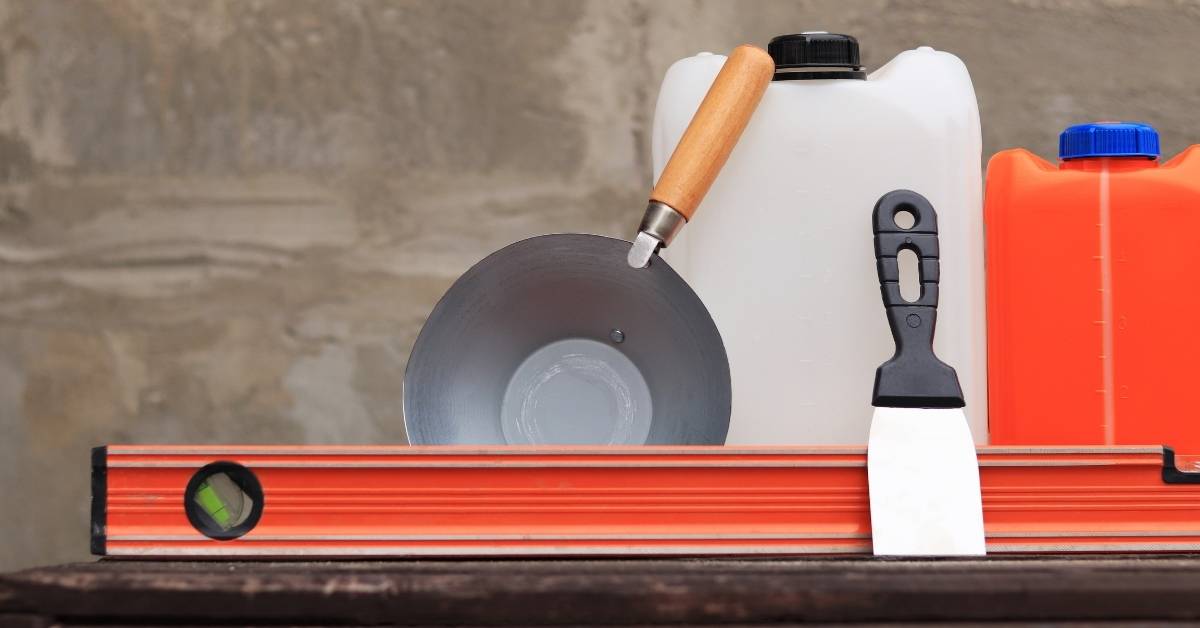
- Trowels: 4″ – 12″ sizes for various tasks; check edges for sharpness.
- Hawk: For carrying plaster; ensure it’s clean and undamaged.
- Scaffold or access platform: Stable, secure setup; check manufacturer’s load capacity.
- Mixing bucket: 15L – 30L size; check for cracks or damage.
- Drill and paddle mixer: Ensure drill is in good working order; check paddle for wear.
- Tape measure: Accurate readings; check zero point.
- Spirit level: Bubble vials work properly; check on flat surface.
- Safety glasses: Protect eyes from debris; ensure they fit well.
- Dust mask/respirator: Filter type suitable for plaster dust; check seal around face.
Quick rule: Always prioritize safety. Check your gear before starting work.
Material types and when to use them
Choose the right materials for your job to ensure a strong, lasting finish.
- Plaster type: Traditional lime or modern gypsum; consider room humidity and temperature.
- Bonding agent/primer: Compatible with chosen plaster; check manufacturer’s recommendations.
- Reinforcement mesh: Fibrous or woven; size depends on ceiling area and crack risk.
- Fasteners: Screws or dabs; suitable for substrate and load requirements.
- Plasterboard screws: Correct length and thread type; check compatibility with board thickness.
- Joint tape: Fibrous or paper-faced; match to joint compound used.
- Joint compound: Quick-set or standard; consider drying time and workability.
- Sealer/undercoat: Primer or paint; suitable for chosen topcoat and substrate.
Quick rule: Always match materials to the job’s specific needs. Don’t assume one size fits all.
What to check on product datasheets and standards
Reviewing datasheets ensures you’re using products correctly and safely.
- Open time: Sufficient working time; consider room temperature and humidity.
- Recommended thickness: Follow manufacturer’s guidelines for optimal results.
- Adhesion data: Check compatibility with chosen substrate (concrete, in this case).
- Substrate prep requirements: Clean, dry surface; check if priming is necessary.
- Mixing ratio: Follow manufacturer’s instructions for correct consistency.
- Storage and shelf life: Check conditions and dates to ensure product viability.
- Safety data sheet (SDS): Review handling, storage, and disposal guidelines.
- Manufacturer contact details: Keep on file for technical support if needed.
Quick rule: Always read and follow manufacturer’s instructions. They know their product best.
Quality Checkpoints, Common Failure Modes, and Troubleshooting
Identify in-process checkpoints such as prep completeness, adhesion tests, and uniform application to avoid later failures. Establish a routine for inspecting edges, corners, and overhead sections during progress. Keep notes on any deviations for future reference.
List common failure modes like poor prep, suction mismatch, or incompatible materials, and outline stepwise remediation steps. When uncertain, consult product instructions, labels, or manufacturer data and adjust the process accordingly.
Pre-finish inspection checklist
Before applying the final plaster coat, use this checklist to ensure a successful finish.
- Check bond uniformity: Ensure scratch and brown coats have consistent bonding with the concrete. Inadequate bonding can lead to delamination.
- Absence of moisture: Confirm no dampness on the surface. Moisture can cause suction problems and affect adhesion.
- Correct scratch-coat keys: Verify that the scratch coat has proper keying for good bond with the final coat. Insufficient keying may result in poor bonding.
- Surface cleanliness: Ensure the surface is free of dust, dirt, and debris. Contaminants can hinder adhesion.
- Temperature check: Make sure temperature is within the specified range for plaster application (usually 50-90°F or 10-32°C). Extreme temperatures can affect curing and bonding.
- Check for cracks: Inspect for any hairline cracks. These should be sealed before applying the final coat to prevent propagation.
- Movement joints: Ensure movement joints are properly positioned and filled with a suitable material to accommodate building movement.
- Curing time: Confirm that the previous coats have been cured for the recommended time (usually 24-72 hours). Insufficient curing can lead to weak bonding.
Quick rule: A thorough pre-finish inspection ensures a strong, durable plaster finish.
Diagnosing and repairing adhesion problems
If you notice delamination or blisters in your plaster finish, follow this guide to diagnose and repair the issue.
- Check for moisture: Inspect for dampness behind the affected area. Excessive moisture can cause delamination.
- Inspect bonding bridges: Ensure that bonding bridges were used correctly in the initial application. Inadequate use can lead to adhesion problems.
- Examine substrate surface: Check if the concrete surface was properly prepared (clean, free of laitance). Poor preparation can hinder adhesion.
- Temperature during application: Verify that the plaster was applied within the recommended temperature range. Extreme temperatures can affect bonding.
- Plaster type and age: Ensure that the correct plaster type was used for your concrete ceiling, and it’s not too old (check expiration date). Incompatible or old plasters can cause adhesion issues.
- Curing time: Confirm that the plaster was given sufficient curing time. Insufficient curing can lead to weak bonding.
- Check for movement: Inspect if there’s any structural movement causing stress on the plaster finish.
- Examine previous coats: Check if the scratch and brown coats were properly applied and cured. Poor application of these coats can cause adhesion problems in the final coat.
Quick rule: Promptly diagnose and repair adhesion problems to prevent further damage and costly repairs.
Long-term maintenance and repair tips
Regular inspection and simple touch-ups can extend the life of your plaster finish. Here’s what to do:
- Annual inspections: Inspect your ceiling annually for any signs of damage, such as cracks or delamination.
- Seal hairline cracks: Seal any hairline cracks with a suitable sealant to prevent propagation. This is a simple DIY task.
- Check movement joints: Ensure movement joints remain intact and functioning properly. Replace or repair as needed.
- Monitor temperature and humidity: Keep an eye on the room’s temperature and humidity levels to prevent excessive expansion or contraction of the plaster.
- Clean lightly soiled areas: Gently clean lightly soiled areas with a suitable cleaner to maintain the finish’s appearance.
- Address localized damage promptly: If you notice any localized damage, repair it promptly to prevent further damage and spreading.
- Know when to call a pro: If you find persistent issues or extensive damage, don’t hesitate to call a professional for assessment and repair.
Quick rule: Regular maintenance and prompt attention to minor issues can significantly extend the life of your plaster finish.
Conclusion
Plastering directly over concrete ceilings can deliver a smooth, durable finish when you respect suction, adhesion, moisture, and proper surface prep. Do the testing first, follow a proven bonding bridge or primer plan, and guard against movement and cracks to prevent costly callbacks.
To finish strong, proceed in this order: verify suitability for your ceiling, perform pre-application tests, clean and profile the surface, choose the right bonding bridge or primer, control suction, apply plaster with the proper technique, and check for crack isolation and movement. Confirm each step with a quick visual and tactile check, and keep the work area safe and well lit as you go.
Avoid common missteps by keeping these safety rules: test on a small area before full work, don’t skip suction control or proper priming, and never force plaster into joints or over already damaged spots. If something looks uncertain or moisture is nearby, pause and reassess before proceeding. When in doubt, or if the ceiling has significant cracks, deflection, or uncertain moisture, call in a pro and get a proper assessment. Stay methodical, stay safe, and you’ll finish with a sound, clean ceiling that lasts. You’ve got this.
FAQ
How do you identify suction issues before plastering a concrete ceiling?
Check the surface with a damp rag and wipe test. If the material sucks fast or feels powdery, you’ll need suction control measures or a bonding bridge approved for ceilings. Follow the product label and manufacturer instructions for the right approach.
What should you do if you see cracks opening after plaster sets?
Inspect the joints for movement and check for proper isolation. Don’t force a crack-isolating system where movement isn’t allowed; choose a system compatible with ceiling framing and plaster type. Consult the label or manufacturer instructions for allowable movement ranges and repair steps.
Can you plaster over old paint or coatings on a concrete ceiling?
Yes, but you must verify the coating is compatible and still adherent. Remove loose paint, test a small area for bond, and follow the coating manufacturer’s guidance. If in doubt, don’t rely on old coatings; prepare a clean, approved surface instead.
What is the final pre-application checklist you should verify on site before plastering?
Confirm surface is stable, dry, and properly profiled. Ensure suction control and bonding bridges are ready according to the product instructions. Double-check ventilation, safety gear, and that tools are clean and set up for a smooth finish.