

Introduction
Mixing gypsum basecoat for patches means preparing a plaster-like mix by combining gypsum with water to arrive at a workable, patch-ready consistency. Follow the product label and manufacturer instructions to determine the proper water amount and mix texture. Check local rules or codes if they govern patch work or setting times in your area.
Set control comes from mixing to the recommended consistency and using it within its pot life, then applying before it stiffens. Do not re-temper or remix once it begins to set; this can weaken the patch and cause cracking. Prepare the area, apply in thin, even coats, and discard any mix that has started to stiffen beyond the manufacturer’s guidance.
Key takeaways
- Understand gypsum basecoat mixing; wear PPE for patch durability and safety.
- Measure water precisely using labeled containers and manufacturer guidance for consistent set and finish.
- Use clean tools, non-dusty mixing pails, and follow set-control instructions.
- Do not retemper mixed basecoat; once set, reject re-wetting and remixing.
- Accelerators/retarders require manufacturer guidance; ambiguous choices risk cracking or dusting.
- Visual checkpoints: cohesive color, uniform texture, edge feathering, and no slurry pooling.
Table of Contents
- Introduction
- Key takeaways
- Why Correct Mixing Matters
- Tools and Materials Checklist
- Material Specs and Standards Explained
- Measuring Water Ratios (How to Measure, Not Invent)
- Step-by-Step Mixing Procedure
- Set Control: Accelerators, Retarders, and Additives
- No-Retemper Rules and Risks of Rewetting
- Troubleshooting and Visual Checkpoints
- Conclusion
- FAQ
Why Correct Mixing Matters
Proper mix consistency affects how well gypsum basecoat bonds to the substrate and resists cracking. You’ll get better strength and durability when the water-to-powder balance is right for the product you’re using. Incorrect mix can lead to delamination or premature patch failure.
Understanding why the mix matters helps you avoid common failures in the field. Pay attention to how the material sets and how long it remains workable. The right approach protects your patch from future wear and pop-outs.
Performance consequences of poor mix
Incorrect water ratio and mixing technique can lead to a weak, crumbly gypsum basecoat that doesn’t bond well with the existing surface. This results in patches that are prone to cracking, delamination, or even falling off completely.
Too much water speeds up setting time but makes the patch weak and brittle. Too little water leaves the mix dry and hard to apply, leading to an uneven surface with voids that can’t support weight.
Proper mixing ensures a consistent, workable basecoat that bonds strongly, stays flexible enough to handle minor substrate movement, and provides long-lasting durability.
Patches versus full coats — what changes
When patching small areas, you’re working with a thinner layer of gypsum basecoat compared to full-surface applications. This means your mixing and application techniques need to be more precise.
For patches, focus on getting the right water ratio for a smooth, easily spread mix. Too thick or too thin can lead to application issues and poor results.
Setting time is also affected by thickness. Thinner layers set faster, so you’ll have less working time before the patch hardens. Keep this in mind when mixing and applying your basecoat.
Finally, expect some differences in finish between patched areas and full coats. To minimize these, feather out the edges of your patches to blend with the surrounding surface as much as possible.
Tools and Materials Checklist
Gather a clean bucket, mixing paddle, and a reliable measuring device. Have PPE and a clean workspace to keep dust and splashes under control. Substrate prep supplies should be on hand so you can start with a solid base.
Keep extra towels, a spray bottle for dampening if needed, and a stopwatch or timer handy. Choosing the right tools makes repeatable mixes easier and safer for you and the job.
Mixing equipment and measuring tools
Before you start mixing, make sure you have the right gear. This checklist helps ensure consistent, quality results.
- Bucket: Use a 5-gallon bucket for small jobs, or larger ones for bigger patches. Ensure it’s clean and dry to prevent contamination.
- Paddle mixer or hand tools: For small batches, use a hand trowel or putty knife. Larger mixes need an electric paddle mixer to ensure thorough blending.
- Measuring device: Use a scale for precise measurements by weight, or a marked container if volume is your method. Inconsistent measuring leads to poor mix quality.
- Watering can or spray bottle: For controlled water addition. Dumping water directly into the mix can cause uneven consistency.
- Tape measure: To ensure you’re adding the correct amount of water based on the product’s recommended ratio.
- Timer (optional): Some products require mixing for a specific duration. A timer helps avoid under- or over-mixing.
- Safety glasses: Protect your eyes from debris during mixing and application.
- Gloves: To protect your hands from the mix and any chemicals in the product.
Quick rule: Always check your gear before starting. Missing something can lead to poor mixes or safety hazards.
Materials and product selection
Choosing the right materials is crucial for a successful patch job. Here’s what to check before you start mixing.
- Gypsum basecoat product: Ensure it’s suitable for your substrate and application. Check the data sheet for recommended uses.
- Primer or bonding agent: Select one that matches the gypsum basecoat to ensure proper adhesion and compatibility.
- Sand (if required): If adding sand for texture, make sure it’s clean, dry, and the correct grit size for your product.
- Fiber reinforcement (optional): If using fibers, ensure they’re compatible with your gypsum basecoat and follow recommended addition rates.
- Accelerator or retarder (if required): Check the package instructions for proper use and storage of any additives to control set time.
- Substrate prep materials: Have your sandpaper, scraper, or other prep tools ready to ensure a clean, receptive surface for the patch.
- Protective coverings: Cover nearby surfaces with drop cloths or plastic sheeting to protect them from spills and splashes.
Quick rule: Always check your materials against the product data sheet. Using incompatible products can lead to poor adhesion, delamination, or other issues.
Material Specs and Standards Explained
Know where to look for the product’s water recommendations and pot life in the label, data sheet, or manufacturer instructions. Look for notes about substrate conditions that are allowable for applying the basecoat. This helps ensure you follow the intended performance path.
Verify any limits on temperature, humidity, or surface preparation as stated by the manufacturer. If in doubt, check the product documentation or reach out to the supplier for guidance before mixing.
Understanding manufacturer data sheets
The manufacturer’s data sheet is your Bible for mixing gypsum basecoat. It tells you exactly how to get the job done right.
First, look for the water recommendation. This is crucial. Too much water weakens the patch, too little makes it crumble.
The data sheet also lists the pot life. That’s how long your mix stays usable after you start. Don’t ignore this. Once it sets, you can’t retemper.
Lastly, check the allowable substrate conditions. If your surface doesn’t meet these, fix it before mixing.
When to consult standards and tech support
Most jobs are straightforward. But sometimes you need extra help.
If your job’s got unusual ambient conditions, like extreme heat or cold, don’t guess. Call the supplier or tech support.
For large or structural repairs, you’re dealing with big forces. You need expert advice to get it right.
If the data sheet’s unclear, don’t wing it. Contact the manufacturer. They want you to succeed and will guide you through.
Measuring Water Ratios (How to Measure, Not Invent)
Use a precise method to measure water, such as a scale or a calibrated container. This reduces guesswork and improves repeatability across patches. Always refer to the product instructions for the recommended approach.
Mixing by weight or a marked measuring vessel helps you stay consistent from batch to batch. If a spec isn’t clear, compare labels or data sheets to confirm the method suggested by the manufacturer.
Volume versus weight measurement
The best way to measure water for your gypsum basecoat is by weight. It’s more accurate, like using a scale at the bakery.
But on-site, you might not have that luxury. So, use a calibrated container instead. Fill it up, pour it out, repeat until you’ve got the right amount.
Pro tip: Always check your product’s instructions first. Some manufacturers prefer weight measurement, others volume. Follow their lead.
Adjusting for temperature and humidity
The weather can mess with your mix. Hotter or drier days need less water. Cooler, wetter ones need more.
But don’t just guess. Make small adjustments based on the conditions. A little less water in the heat, a little more when it’s damp.
Rule of thumb: For every 10°F change in temperature, adjust your water by about 5%. But remember, this is just a guide. Always check with the manufacturer first.
Step-by-Step Mixing Procedure
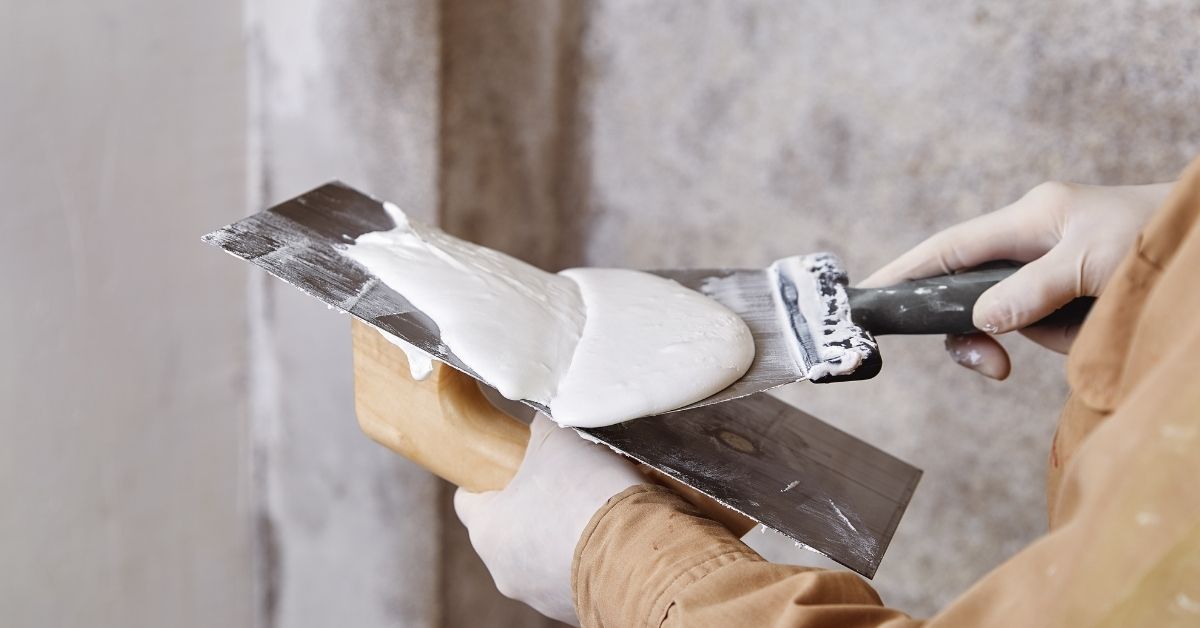
Start with clean water and a clean bucket to avoid contamination. Add the powder gradually and keep mixing until no lumps remain. Observe the mix until it holds a lump-free consistency that still flows enough to work into the patch.
Watch the pot life as you combine materials and proceed with application. If the mix thickens too quickly, stop and recheck your water amount according to the product’s guidelines.
Step-by-Step Process
Follow these practical steps to mix your gypsum basecoat for patches. This sequence ensures a lump-free, consistent mix ready for application.
- Preparation: Ensure all tools and materials are clean and dry. Put on safety gear – gloves, goggles, and a dust mask.
- Measure water: Use the manufacturer’s recommended ratio. Start with 3/4 of the total water needed to account for any absorption by the powder.
- Add powder: Slowly pour the gypsum powder into the water while mixing at low speed. This helps prevent lumps and ensures a consistent mix.
- Mixing: Increase mixer speed gradually, working up to medium-high. Mix until the consistency is smooth and lump-free, usually around 2-3 minutes.
- Final check: Stop mixing and observe the pot life. If it’s too thick or starts setting before application, adjust water ratio accordingly for future batches.
Batch mixing for larger repairs
When tackling bigger patches, mix in batches to maintain consistency and avoid overworking the material. Here’s how:
Batch size: Aim for no more than 50 lbs (22.7 kg) per batch. This ensures you can mix thoroughly without overworking.
Mixing motion: Use a consistent, figure-eight pattern with your mixing paddle to ensure all material is incorporated and there are no dry spots. Start at the bottom of the tub and work your way up.
Consistency check: Stop mixing occasionally to check for lumps or inconsistencies. If you find any, continue mixing until smooth. Remember, overmixing can cause the material to set too quickly, so keep an eye on pot life.
Small-patch hand mixing
For small patches, mixing by hand is efficient and helps avoid waste. Follow these steps:
Start with the manufacturer’s recommended water ratio. Pour about 2/3 of the water into a clean, dry bucket.
Slowly add the gypsum powder while stirring continuously with a strong, flat-bladed trowel or a mixing paddle attached to a drill running at low speed. This helps prevent lumps and ensures a consistent mix.
Once all powder is added, increase mixing speed gradually, working up to medium-high. Mix until the consistency is smooth and lump-free, usually around 1-2 minutes. Be careful not to overmix, as this can cause the material to set too quickly.
Set Control: Accelerators, Retarders, and Additives
Explore common set-control options and how they might alter working time and strength. Be aware of compatibility risks when combining products. Additives should be used only when prescribed by the manufacturer or your project specs.
Always follow the manufacturer’s recommendations for any set-control additive. If you’re unsure, consult the product instructions or the supplier before mixing in additives.
Accelerators and their appropriate use
Accelerators speed up the setting time of gypsum basecoats. You might need them for quick repairs or when working in cold temperatures.
Use accelerators sparingly. Too much can cause excessive heat, leading to weak patches.
Always use accelerators compatible with your chosen gypsum basecoat. Check the manufacturer’s data sheet before mixing.
Follow these steps to add accelerator: Measure, mix it with water first, then combine with the dry powder. Stir well for even distribution.
Retarders and why they are uncommon
Gypsum basecoats set quickly on their own, so retarders aren’t usually needed. Adding them can cause unwanted delays.
Be cautious with retarders. They might react unpredictably with gypsum, leading to weak or crumbly patches.
Instead of using retarders, control set time by adjusting water content and temperature. Less water and warmer temperatures speed up setting; more water and cooler temps slow it down.
If you must use a retarder, test it first on a small batch to ensure compatibility and desired results.
Best-practice mixing with additives
Additives like plasticizers, fibers, or pigments can enhance your gypsum basecoat. But they must be used correctly to maintain strength and adhesion.
Test before you mix. Try small test batches first to ensure the additive works well with your chosen product.
Document your mixes. Note down what worked, what didn’t, and any changes in properties like set time or strength.
Follow supplier limits. Too much additive can compromise patch quality. Stick to recommended dosages to avoid issues.
No-Retemper Rules and Risks of Rewetting
The no-retemper rule means you should avoid reworking a basecoat after it has begun to set. Rewetting can weaken bonds and compromise the patch. It can also affect final hardness and adhesion.
Recognize the safety and performance concerns when re-wetting a partially set mix. If you encounter a stiff or partially set surface, consult the guidelines rather than trying to revive it with water mid-work.
What happens if you retemper
The no-retemper rule isn’t just a suggestion. Retempering gypsum basecoat weakens it, plain and simple.
When you add water to a set or partly set mix, the new water can’t bind with the gypsum crystals that have already formed. This leaves you with a patch that’s weaker than it should be, with reduced strength and poor bonding.
Inconsistent setting is another issue. The old mix sets faster than the new water can integrate, leaving you with a patch that’s hard on the outside but still soft inside. That’s a recipe for failure.
Proper handling of leftover mix
Leftover gypsum basecoat isn’t something you can save for later. Once it’s mixed, it starts to set and there’s no turning back.
The best way to handle leftovers is to avoid them in the first place. Measure your materials carefully and mix only what you need. For larger repairs, consider batch mixing – that way, you can keep adding fresh mix as needed without wasting any.
If you do have leftover material, don’t try to retemper it. Instead, dispose of it safely in accordance with local regulations. And remember, a little planning goes a long way in preventing waste.
Troubleshooting and Visual Checkpoints
Use a visual and tactile checklist to judge mix quality, consistency, and how the material behaves as it cures. Look for uniform color, smooth texture, and absence of powdery residues. Timing cues can help you decide when to move to the next step.
Keep quick corrective actions in mind for common issues, such as adjusting water or mixing duration within the manufacturer’s guidance. When in doubt, verify recommendations on the product label or data sheet before making changes.
Signs of too much or too little water
Check your mix’s consistency before applying to avoid common issues.
- Too Much Water: Mix is soupy, slumps quickly, and has a glossy sheen. Confirm by checking if it pours easily but doesn’t hold its shape.
- Too Little Water: Mix is crumbly, dry, and doesn’t stick together. Confirm by trying to form a ball with the mix; it should hold together without cracking.
- Right Amount of Water: Mix holds its shape, isn’t too wet or dry, and has a matte finish.
Quick rule: Aim for a consistency that holds its shape but isn’t crumbly or soupy.
Remediation at different stages (fresh, plastic, set)
Act quickly to fix issues based on the mix’s current stage.
- Fresh Mix: If water ratio is off, remix immediately. Don’t let it sit too long.
- Plastic Stage: If mix is too wet or dry, discard and remix. Can’t be saved once it’s plastic.
- Set Stage: If issues arise, prepare substrate again. You can’t fix a set mix.
- Cracking in Set Stage: If cracks appear, start over. Cracks indicate serious issues that won’t improve with time.
Quick rule: The earlier you catch and fix issues, the better your final patch will be.
Conclusion
Keep it clean, dry, and stable. Correct mixing matters for safety, durability, and a clean look.
Follow a simple, real-world checklist: check the spec for water ratio and material, measure water and powder carefully, add water in stages and stir fully, keep the mix usable within its pot life, add accelerators, retarders, or additives only as directed, test a small batch first to confirm consistency and set, then apply in the intended area and monitor closely for changes.
Avoid the common traps: don’t guess the ratio or eyeball it, don’t drown the mix with water, and don’t rework a patch after it starts to set. Wear basic safety gear, mix in a well-ventilated area, and keep extra material and clean water handy. If you see inconsistent texture, or the mix shows signs of pre-cracking or slow set, stop and reassess before proceeding to prevent costly damage.
If the job involves complex substrates, uncertain specs, or locations that carry high risk of failure, it makes sense to bring in a professional rather than push on. Stay disciplined, follow the steps, and you’ll land a patch that holds, looks right, and lasts. You’ve got this—steady, measured work wins plaster patches every time.
FAQ
How can I tell if the gypsum basecoat mix has the right consistency for patches?
Look for a smooth, lump-free paste that holds its shape without sagging. If it drags or slumps when you lift the trowel, it’s too wet. If it crusts or stiffens too fast, it’s too dry. Check the product label for the visual cues they provide.
What’s the safe way to adjust water ratios during mixing?
Add water gradually and mix thoroughly after each small addition. Stop once the mix can hold a slight peak on the trowel without slumping. Always refer to the manufacturer instructions on the bag or pail for recommended guidance.
What should I do if the patch starts hardening before I’m finished applying?
Don’t rewet it. No-retemper rules apply. If it’s getting tacky, mix a fresh batch and start a new patch area rather than trying to blend old and new material.
What signs indicate I should skip additives or accelerators and go back to plain mix?
If you see failure to set, crumbling edges, or unusual color changes, review the label for allowed additives and follow the manufacturer guidelines. Unsafe or unapproved additives can weaken the patch—check local rules or the product datasheet before proceeding.