

Introduction
Yes, you can overseed without core aeration when a lawn is thin but the surface is open enough for seed to reach soil. It is not a substitute for correcting severe compaction, poor drainage, heavy thatch, or extensive bare ground. If water puddles or runs off, the soil is hard to penetrate, thatch is about 1 inch or more, or seed would sit mostly on matted debris, stop and correct the limiting problem with core aeration, dethatching, slit seeding, drainage work, or renovation.
For cool-season lawns, late summer to early fall is commonly the most favorable seeding window because seedlings usually face less heat, drought, and weed pressure than in spring or summer. For permanent warm-season repair, seed only during that grass’s active-growth period and use a local extension calendar to confirm suitable soil and weather conditions. Temporary winter-rye overseeding of warm-season turf is a separate practice: its timing depends on local temperature patterns, winter-color goals, and the spring transition back to the warm-season lawn. Do not use a national calendar in place of local guidance.
Match seed to the existing turf, climate, sun or shade, drainage, traffic, and intended mowing height. No single grass suits every lawn. See Penn State Extension’s guidance on lawn establishment and grass selection before choosing a species or blend.
Success without aeration depends on exposing some soil, applying the correct amount of compatible seed evenly, and keeping the surface moist through germination without washing seed away.
Materials/Tools List
- Grass seed: A species or blend compatible with the established lawn and site. Use the overseeding rate on the seed label or a local extension recommendation; rates vary by grass type.
- Mower and collection method: A bagger, rake, or other way to remove heavy clippings, leaves, and debris.
- Leaf rake: For lifting debris and lightly scratching exposed soil. A garden fork can help with a small localized spot, but it is not an adequate remedy for widespread compaction.
- Broadcast or drop spreader: A drop spreader is useful along edges; either type can work when calibrated.
- Hose or irrigation system: Use a sprinkler pattern that covers the whole area without runoff. Place a few small containers around the lawn to identify dry spots and uneven coverage.
- Optional thin topdressing: Screened, weed-free compost or clean mulch, used only if needed to help hold seed in place.
- Soil-test-directed amendments: Fertilizer, lime, or other amendments only when indicated by a soil test, local recommendation, and product label. Follow the label for timing, rate, and required PPE.
- Conditional equipment: A core aerator, dethatcher, or slit seeder if the pre-seeding inspection shows that surface overseeding will not provide seed-to-soil contact.

Step-by-Step Instructions
- Choose the right window and diagnose the cause of thinning. For cool-season grass, use the local late-summer-to-early-fall window. For permanent warm-season repair, wait for active growth; for temporary winter rye, use local temperature-based guidance and plan for spring transition. Work only when soil is workable rather than waterlogged, irrigation is available, and no major heat, drought, frost, or severe-storm period is expected. Check pH and nutrient needs with a soil test when they are uncertain. Check drainage by watching for standing water or runoff; fix drainage or grading failures before seeding. Identify persistent shade and use a shade-tolerant compatible grass only where appropriate, or reduce the shade problem if practical. Identify disease symptoms, traffic damage, irrigation gaps, and substantial weeds; correct the cause before buying more seed. Control weeds early enough to meet every herbicide label’s reseeding interval.
- Mow and clear the surface. Make one modestly lower-than-normal mowing only if the existing turf is actively growing and is not heat- or drought-stressed. Do not scalp. Bag or rake up heavy clippings, then remove leaves, sticks, and loose debris. The goal is visible openings where seed can contact soil, not bare soil everywhere. During routine mowing, remove no more than one-third of the leaf blade at a time.
- Rake lightly and decide whether to stop. Use a leaf rake to lift remaining debris and scratch the surface lightly. Do not bury seed deeply or force a rake through a compacted lawn. If the rake cannot expose soil, seed remains on thatch, or water infiltrates poorly, do not proceed with broadcast-only overseeding. Use core aeration for widespread compaction, dethatching for excessive thatch, or slit seeding or renovation where better seed placement is needed.
- Measure and calibrate. Measure the lawn area, then weigh out the total seed required by the product label or local recommendation. Test the spreader over a tarp or pavement, adjust the opening, and return the test seed to the hopper. Keep the gate closed while turning or transporting the spreader so seed does not form piles.
- Apply seed in two directions. Put half the measured seed in the spreader and make parallel passes across the lawn. Apply the other half perpendicular to the first passes. This helps reveal missed strips and limits heavy streaks. Keep seed out of planting beds, pavement, and drains. University of Minnesota Extension recommends splitting the rate between two directions for more even coverage in lawn renovation.
- Settle seed into the surface. Lightly rake just enough to settle seed among the grass and onto exposed soil. Do not deeply incorporate it. If wind, slope, or an exposed surface could move seed, apply screened, weed-free compost or clean mulch in a thin layer, about ¼ inch or less. Do not use material that mats, stays excessively wet, or may introduce weeds.
- Water for germination. Water gently immediately after seeding. Keep the surface evenly moist, not saturated, until emergence. Inspect daily. Hot, dry, or windy weather may require several short applications in a day; cool or rainy weather may require less. Check that all zones receive water. Stop or shorten a cycle before runoff, puddling, or muddy soil develops.
- Protect, inspect, and transition irrigation. Keep foot traffic, pets, and mowing off seeded areas until seedlings are rooted and have received at least one appropriate mowing. Inspect for emergence according to the grass species and weather rather than a fixed number of days. Once emergence is widespread and seedlings resist a gentle tug, begin lengthening the time between irrigations. At each longer interval, apply enough water to moisten the developing root zone, then check the lawn before the next cycle: if the surface dries excessively, shorten the interval; if water puddles or runs off, shorten run time and investigate drainage or compaction. This is a gradual transition after rooting, not an immediate change when seedlings first appear.
- Make the first mow conditionally. Check seedlings regularly after they emerge. Mow only when they are firmly rooted, the ground is not wet, and the grass is tall enough for the mower at its selected setting to remove no more than one-third of the blade. The calendar varies by species and weather, so do not use a fixed 3-inch trigger. Use a sharp blade and return to a grass-appropriate mowing height after the lawn is established.
Common Challenges and Troubleshooting
- Seed remains on thatch or the lawn stays thin: Inspect closely: seed resting on matted debris rather than exposed soil indicates poor seed contact. Lightly rake only if the soil is not compacted. If thatch is heavy, water infiltrates poorly, or raking cannot expose soil, stop reseeding and plan dethatching, core aeration, slit seeding, or renovation in the proper season.
- Seedlings dry out or fail in dry strips: Check the surface, not just the sprinkler timer. Dry, pale surface soil between cycles indicates insufficient frequency or uneven sprinkler coverage. Increase the frequency of short cycles and use containers to identify missed areas. If a single cycle causes runoff, reduce its duration rather than adding more water; investigate compaction or slope if runoff persists.
- Puddles, algae, or weak seedlings: Check whether the soil stays wet after irrigation or rain. Reduce irrigation frequency or run time, correct sprinkler overlap, and do not reseed until drainage is functioning. Persistent standing water, drainage failure, or grading problems require local extension or professional help.
- Uneven germination or stripes: Check spreader calibration, lawn-area calculation, seed weight, and sprinkler coverage. Reseed only confirmed thin areas at the label rate after correcting the cause; do not double the rate across the whole lawn.
- Little emergence despite adequate moisture: Inspect whether seed has contact with soil and whether it was buried too deeply or washed into low spots. Confirm that the seed and timing suit the grass type and local conditions. If disease, deep shade, compaction, or drainage is the underlying cause, correct that issue rather than repeatedly adding seed.
- Fertilizer burn or excessive growth: Do not apply extra fertilizer to speed germination. Fertilizer is optional, not automatic. Apply it only when a soil test, local recommendation, and the product label support it; follow the label’s timing and rate, wear required PPE, avoid overlaps, and sweep granules from hard surfaces.
- Weeds after seeding: Do not apply a pre-emergent herbicide unless the exact product label explicitly permits use with your grass, rate, and timing; many pre-emergents also inhibit desired grass-seed germination. Wait to use post-emergent products until the label permits treatment of newly established turf. The EPA’s pesticide label system can help locate the controlling product label.
- Birds disturb seed: Improve seed-to-soil contact and, if necessary, use a thin, clean mulch. Avoid thick straw that mats or stays wet. Do not use wildlife-entangling netting unless it can be installed, monitored, and removed safely.
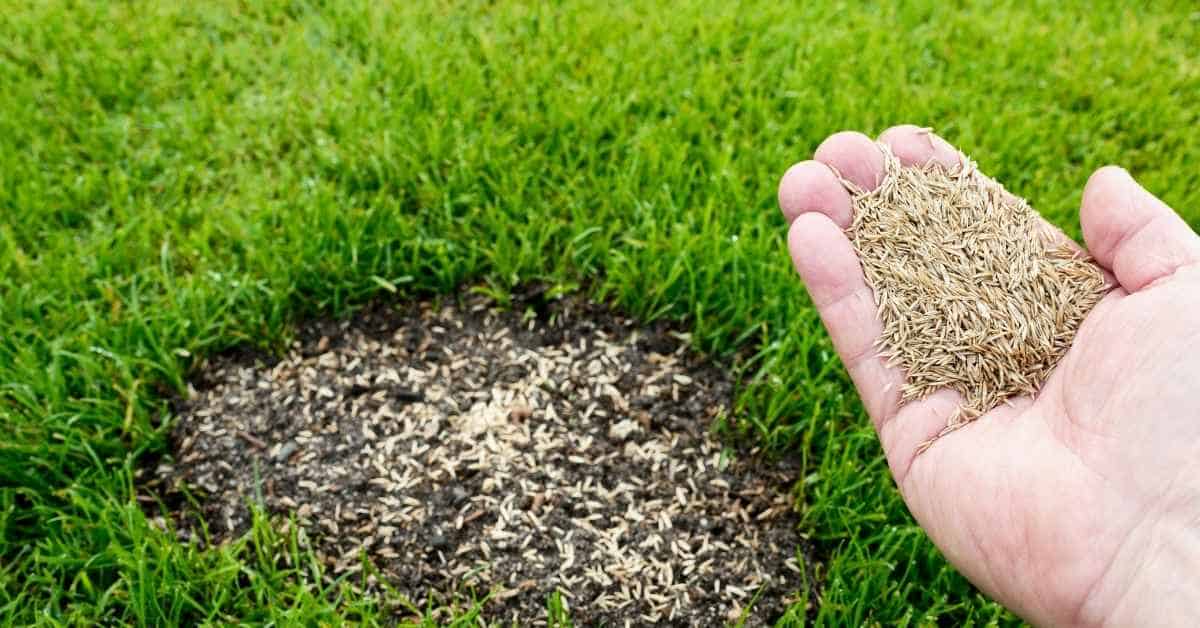
Why These Solutions Work
Grass seed needs moisture and soil contact to germinate. Close-but-not-scalping mowing, debris removal, light raking, and a two-direction spread pattern improve the chance that seed reaches open surface spaces rather than leaves or matted thatch. Light, frequent irrigation protects the shallow germination zone from drying out. Once seedlings are widespread and rooted, gradually lengthening irrigation intervals supports a transition to watering the developing root zone while avoiding both drought stress and saturation.
Skipping aeration is less disruptive only when aeration is unnecessary. It does not solve a sealed soil surface, serious compaction, excess thatch, or drainage failure. Oregon State Extension recommends light raking and cautions against a mulch layer deeper than about ¼ inch during lawn establishment and renovation.
Tips, Alternatives, and Next Steps
- Choose a corrective method when needed: Core aeration can relieve widespread compaction; dethatching addresses excessive thatch; slit seeding improves seed placement; and full renovat